

 Suche
Suche
Cane and Able Fitness makes the gym less intimidating for people with visual impairments
In 2014, Evan Schwerbrock lived a pretty normal life for a 22-year-old. He had recently graduated from college with a degree in health sciences and worked in the fitness industry, where he shared his passion for strength training, activity and biomechanics. But during a recreational volleyball game, he realized something was wrong with his vision. “Suddenly the lights started bothering me,” he remembers. After losing sight of the ball, he was hit in the face. “Later I threw the ball up to serve and completely lost sight of it,” he says. “I had to do my best when it came again...

Cane and Able Fitness makes the gym less intimidating for people with visual impairments
In 2014, Evan Schwerbrock lived a pretty normal life for a 22-year-old. He had recently graduated from college with a degree in health sciences and worked in the fitness industry, where he shared his passion for strength training, activity and biomechanics. But during a recreational volleyball game, he realized something was wrong with his vision.
“Suddenly the lights started bothering me,” he remembers. After losing sight of the ball, he was hit in the face. “Later I threw the ball up to serve and completely lost sight of it,” he says. “I had to do my best to know when it would come back down, and I barely hit it.”
Assuming it was contact lenses, Schwerbrock made an appointment with an ophthalmologist and wasn't too worried. But the night before his appointment, as he drove on a foggy highway, he could barely see two feet in front of his car and was crawling along at just under 30 miles per hour, he says. At this point he realized his vision problem was serious.
His exam revealed a diagnosis of Leber hereditary optic neuropathy (LHON), a rare genetic disorder that causes significant, permanent vision loss in both eyes, according to the Cleveland Clinic. Within two weeks of the first onset of symptoms, he was legally blind.
But Schwerbrock hasn't let his visual impairment stop him from doing what he loves: lifting weights and helping others start their strength training journey. In July 2020, he took this passion a step further and founded Cane and Able Fitness, an online resource with adaptive fitness information for people with visual impairments. This is how Schwerbrock makes fitness more accessible for people with visual impairments; Plus, his best fitness tips for those with vision loss.
How Cane and Able Fitness was born
According to his LHON Diagnosed, Schwerbrock attended a master's program in kinesiology in Chicago near his sister, who was able to help him navigate the city and his new lifestyle — one that now included a cane. He eventually moved to Alaska to work as a strength and conditioning coach for the U.S. Army. It became clear that it was important to stay active (especially through strength training). was an essential part of his mental health, he says.
"I tried to change my routine as little as possible [after my diagnosis] because the gym was my happy place," he explains. “I quickly adapted [to my new lifestyle] because I just stuck with it.” In fact, after his illness had progressed completely to legal blindness, Schwerbrock began competing in strongman competitions (a weightlifting sport in which participants complete a variety of strength-based tasks). He even won Strongest Man in Illinois for his weight class in 2019, a testament to his courage and the opportunities that lie ahead of him.
Evan Schwerbrock on adjusting to the gym as a blind person
I tried to change my routine as little as possible [after my diagnosis] because the gym was my happy place. I quickly adapted [to my new lifestyle] because I just stuck with it.
—Evan Schwerbrock on adjusting to the gym as a blind person
Watch this visually impaired runner complete her first trail ultramarathon
During the COVID pandemic, Schwerbrock realized the strategies he had picked up for training with a visual impairment had to be shared with others, especially since he had fitness credentials and previous experience working in weight rooms. (In addition to an MS in Kinesiology, Schwerbrock is a NASM-certified personal trainer, a certified strength and conditioning coach, and a functional movement specialist.)
Despite Schwerbrock's expertise, he felt that people still doubted his strength training ability and assumed that he couldn't do many exercises. “I realized when I was questioned so many times, how much worse were other people who were doubted who weren't 6'3" and 220 pounds and known for doing this stuff all the time?" he says. "What if they did? You haven't been lifting for long? How much are they doubted, either by themselves or by others, and how little do they know?"
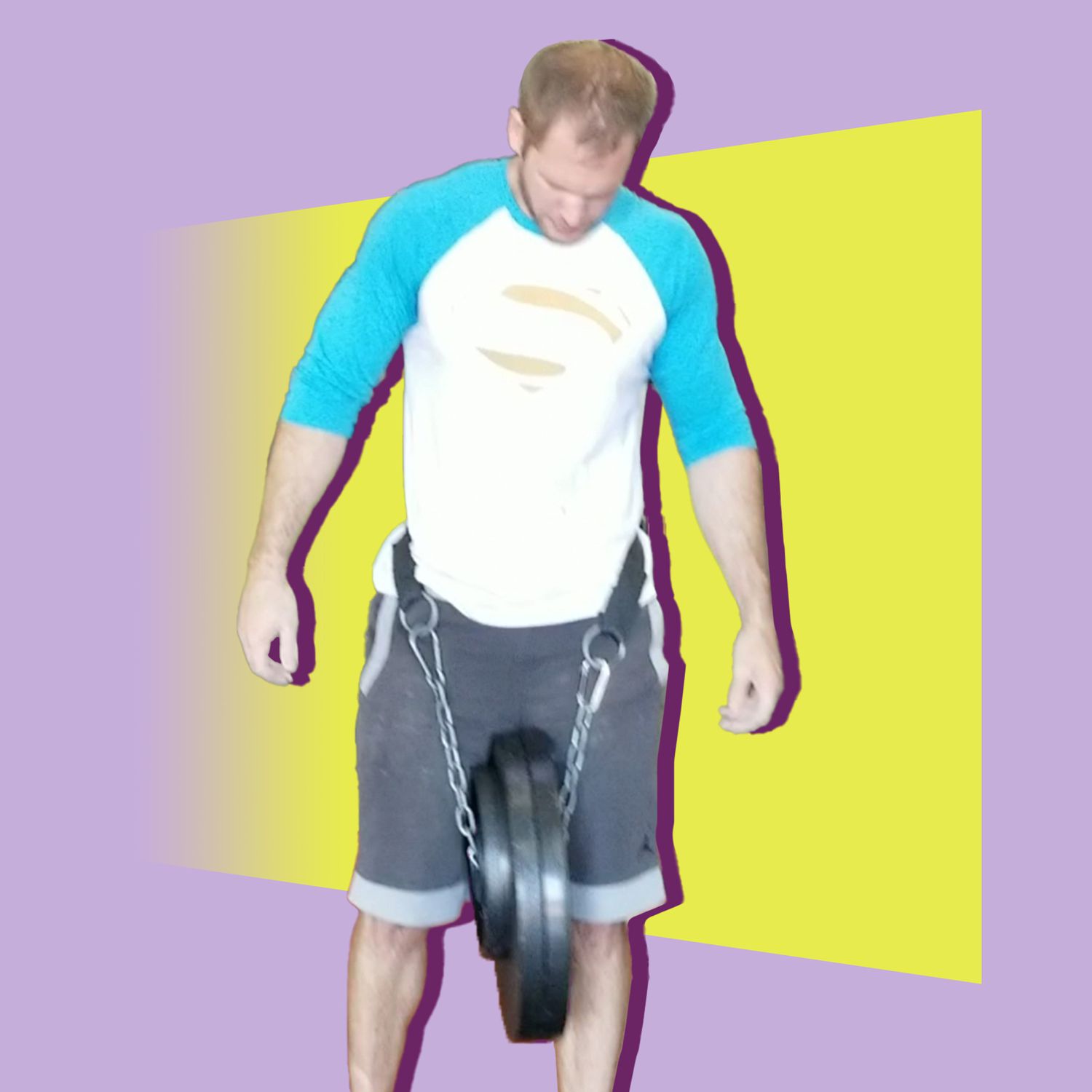
Courtesy of Evan Schwerbrock.
With that, Cane and Able Fitness was born in 2020. The site provides accessible, non-intimidating information on strength training, mobility, nutrition and more. And all of this in a straightforward, encouraging way – without making the user feel pampered or patronised, a key Schwerbrock differentiator. Today Cane and Able Fitness ran Accessibility-focused virtual Workshops, seminars and calls to organizations around the world. Schwerbrock also offers consulting services to the visually impaired community on gym-specific adaptations (think how to adapt exercises for visual impairments or plan workouts that don't use tons of equipment to make it easier to set up in a crowded room). In addition, Cane and Able Fitness offers remote coaching for people with visual impairments and regularly creates free accessibility resources (e.g. exercise programs or cooking tips for the community on the Cane and Able Fitness blog and social media).
The best fitness tips for people with visual impairments
For someone with a visual impairment, working out - whether at the gym or at home - can seem intimidating at first, especially if they are new to fitness first of all. Not to mention “The lack of immediate accessibility and organization in a gym can be a really big problem,” notes Schwerbrock. A crowded gym, a confusing layout, equipment haphazardly strewn across the floor or misplaced, or new equipment can be particularly difficult to navigate (and possibly even unsafe) with a visual impairment.
However, regular exercise practice (particularly strength training) is crucial to staying healthy and functioning independently with a visual impairment, says Schwerbrock. Here Schwerbrock shares the best exercise tips for people with visual impairments.
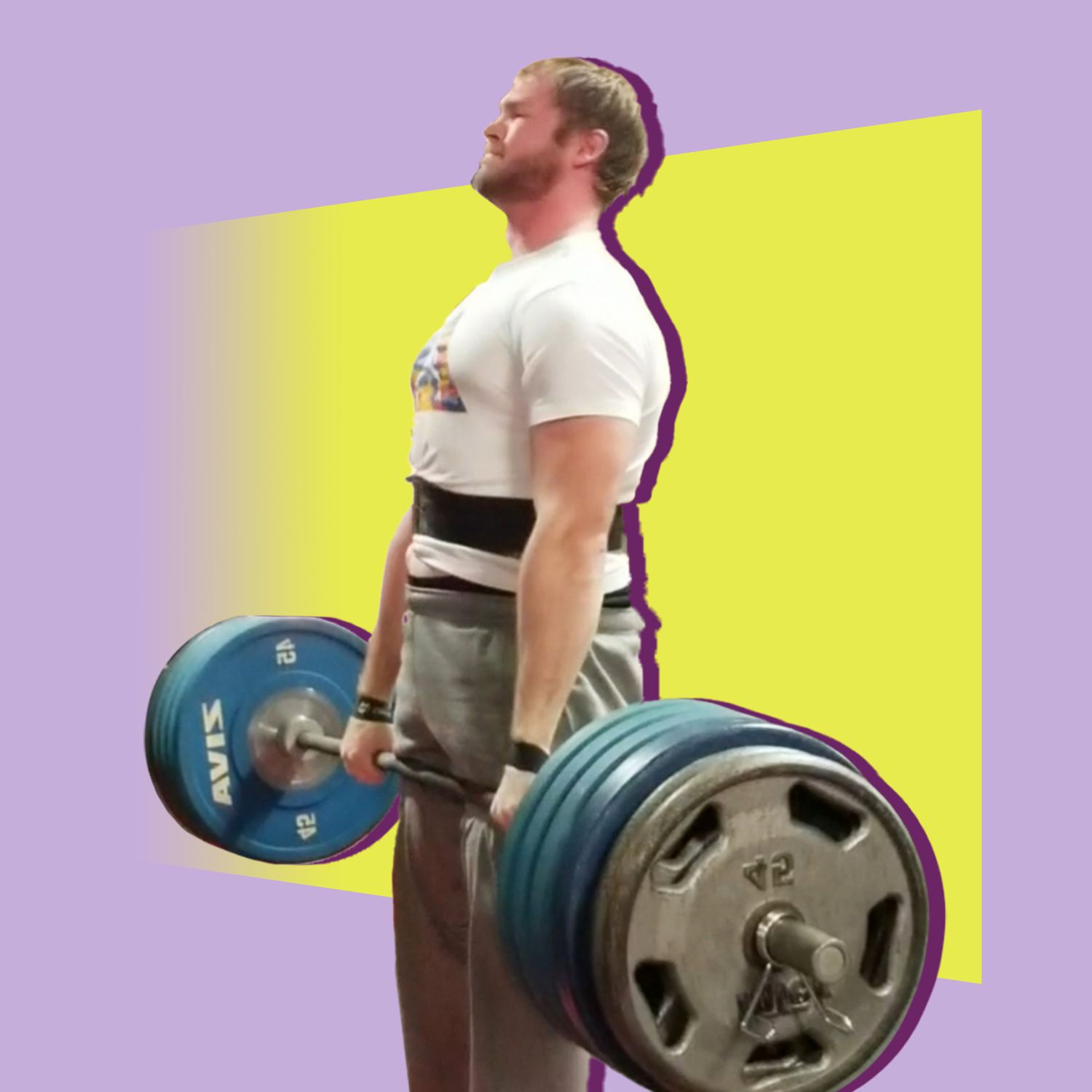
Courtesy of Evan Schwerbrock.
Meet the new Peloton trainer making adaptive fitness mainstream
Familiarize yourself with the gym layout and equipment.
To help beginners feel comfortable in the gym, Schwerbrock created a free gym acclimation course with documents and YouTube videos, all designed to demystify the space for people with visual impairments. In it, he offers best practices for exploring the gym and building exercise independence. His best advice for starting the gym? Take a day to simply walk around the gym and note where things are, how the equipment is organized, and what dumbbells, weight plates, and other common equipment are present (and whether it's easy to distinguish different sizes or weights by touch rather than sight). It's also helpful to introduce yourself to the gym staff in case you need additional help getting settled in or assistance during your time there.
Set up a home workout area.
Exercising at home may be more mentally accessible for people with visual impairments if this is an option. “Because you know your surroundings particularly well, you are less afraid to move,” says Schwerbrock. You can also decide which organization of your space is best for your needs.
Shape Best In Fitness Awards 2023: Best Small Home Fitness Equipment
Prioritize postural exercises and lower body strength.
While general strength training and exercise are appropriate for most fitness routines, people with vision impairments need to focus on postural exercises and lower body training that directly counteract the lack of skills resulting from vision loss. For example, people with visual impairments often need to exercise neck retraction (aka pulling the head and neck back from a forward leaning position), neck extension (aka tilting the head back until the chin is pointed toward the sky), and the rhomboid muscles in the upper back.
These muscles need special attention because people with visual impairments are more likely to lean forward, whether to get closer to a phone, book or screen they're reading on, or because they'll make less eye contact than the social norm with their heads down, taking in their surroundings, says Schwerbrock.
The Best Exercises to Improve Widow's Hump, According to Experts
People with visual impairments, especially those who use a cane, may also take a "short step" to protect themselves from hitting an obstacle. A short step is a quad-dominant movement pattern that prevents hip extension (also known as “opening” the hip joint so that the angle between the pelvis and thigh increases), buttock involvement, and full range of motion of the legs. To address these muscle imbalances, Schwerbrock programs Bulgarian squats with a handle or tool to aid balance, as well as hip flexor stretches.
Strengthen your mind-body connection.
Additionally, build your mind-body connection and learn what certain movement patterns feel like when done correctly, advises Schwerbrock. “Tactile cues are huge,” without the ability to use mirrors or video to check shape, he points out. “Get used to what a squat should feel like and what a hip joint should feel like, and get used to those differences.”
Most importantly, find a good support system that is willing to help you adapt to life without a clear vision – but at the same time build your own independence, advises Schwerbrock. “In the end, you are responsible for pursuing those paths of fitness that help you take care of yourself,” he says.