

 Suche
Suche

One of the biggest misconceptions about weightlifting is this myth that it makes women “get big.” This couldn't be further from the truth. On the other hand, many women who "lift" weights pick up the same 5-pound dumbbells week after week and wonder why they don't see aesthetic changes in their bodies. This can be for a variety of reasons, but for the sake of this article, we will discuss the effects of strength training.
Before we dive into the “how” of strength training, let’s look at some tried-and-true principles and clear up some misconceptions.
1. Lift heavy.
To stimulate muscle growth or hypertrophy, a stimulus must be placed on the muscle. As mentioned earlier, women tend to generally stick to weights that they are comfortable using for a full three sets. However, greater stimulus must be applied to the muscles to see real changes. You have to step out of your comfort zone and place higher physiological demands on your muscles. Once you can make this paradigm shift in your mind, you can make significant progress in both your strength and muscle gains.
2. How to choose the right weight.
Women often underestimate their strength and default to the lighter weights. This is a mistake. Instead, choose a weight that can be lifted ten times, with the last two reps providing significant challenge. It's important to stay in good shape when performing your exercises. As soon as you notice that your form is no longer working, drop the weight that is being lifted or take a break. The goal here is to lift heavy and well, not lift heavy and get hurt. Make sure you have a spotter when performing exercises like squats, bench presses, and overhead presses, especially as you gain weight.
3. Sets and reps.
The typical recommendation for building muscle is to complete three to four sets of eight to 12 repetitions of an exercise. Choosing a heavier weight and performing fewer repetitions (e.g. 3 to 6) will make you more likely to gain muscle strength, while lighter weights and higher repetitions will result in an increase in muscular endurance. If you're aiming for more strength, give yourself a little more rest time between sets. If you want to increase muscle size, reduce the rest time between sets.
4. Frequency.
One of the most important elements to achieving muscle gains is consistency. Therefore, try to weight train four to five days a week if possible. Recording your exercises and weights in a journal is a great way to track gains. You may have good intentions to lift heavy, but the only way to know if you're getting stronger is to write down the sets, reps, and weights used during each workout. Another thing to consider is breaking down your strength training sessions. Do you perform full-body workouts or do you focus solely on upper or lower body exercises? Or maybe two body parts per workout? Whatever you ultimately decide, the key is consistency and overload.
5. Choose your exercises.
There are countless ways to create a workout to gain muscle mass. Ideally, perform exercises that require larger muscle groups first, such as: B. Squat/squat variations, bench press, deadlift, lat pulldown and overhead press. This allows you to spend more energy on these movements and perform well on smaller movements toward the end of your workout. Choose six to eight exercises for a given day. You can break them up into circuits or do them separately, keeping your rest time around 60 seconds between sets.
Example exercises for building muscle
As mentioned above, stimulating muscle growth occurs when muscles are pushed beyond their comfort zones. Be sure to incorporate some of these movements into your training to maximize your muscle hypertrophy.
Squatting
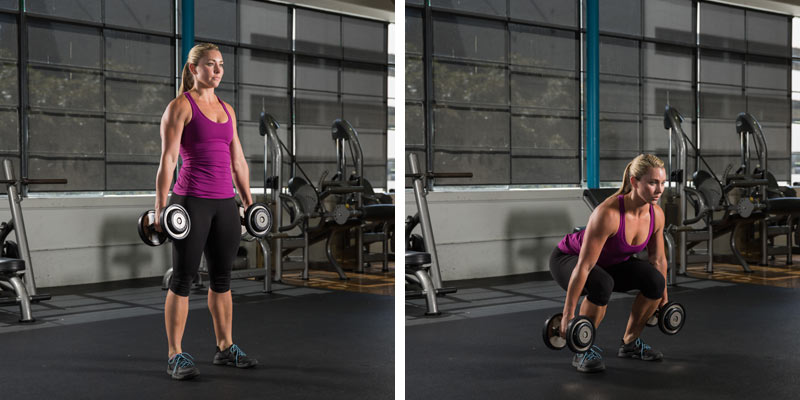
Whether you choose heavy dumbbells, a barbell, or the squat rack, this exercise is great for sculpting and building muscle in your quads and glutes. Maintaining proper form is key, so gradually add weight when exercising while maintaining good form. When you look in the mirror, ideally you should pretend to be sitting on a chair at the bottom of your squat, with your heels on the floor and your hips back.
Shoulder press
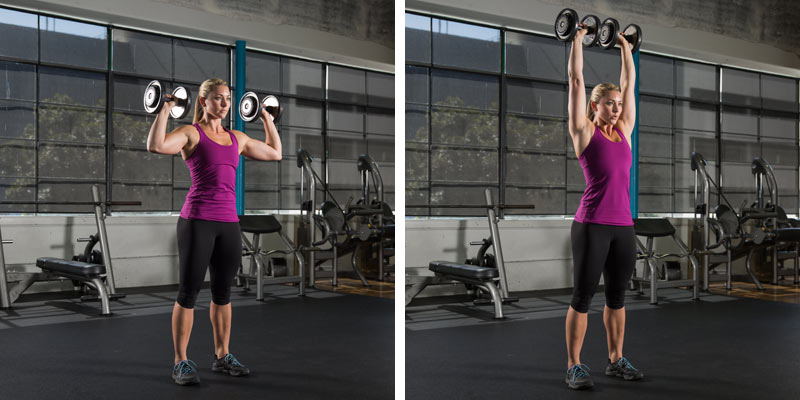
There are a number of shoulder press variations, including the dumbbell press, the Arnold press, and the behind-the-neck press. These exercises are great for shoulders, traps, and upper body. Don't be afraid to add some weight and make sure you have a spotter if you're really pushing yourself.
Deadlift
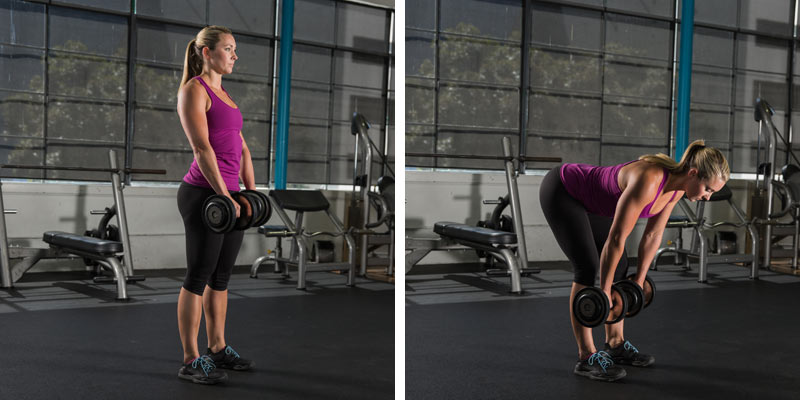
Whether you choose single-leg or traditional deadlifts, use dumbbells or barbells, this versatile exercise works the hamstrings, glutes and back muscles. Form is crucial in this exercise. Therefore, make sure that you have a flat back and a slight bend in your knees. When you feel your back rounding, drop the weight and refocus on your form.
Chest press
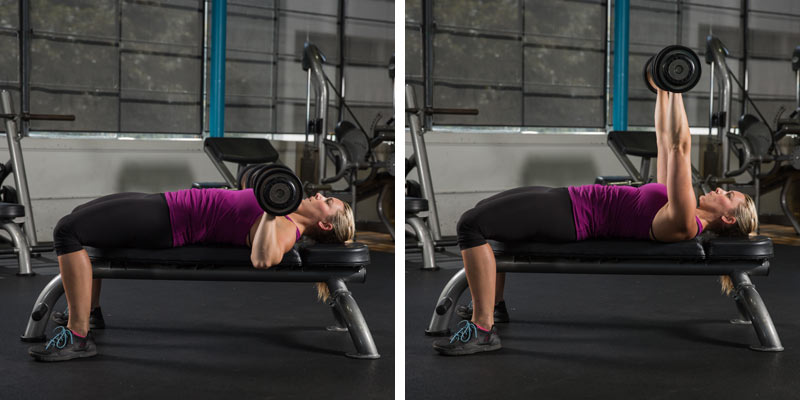
There are countless ways to perform a chest press, including an incline, decline, flat bench, or floor that target the chest from multiple angles. Dumbbells or a barbell can be used, and if you're really pushing your limit, you should have a spotter.
Biceps beckons
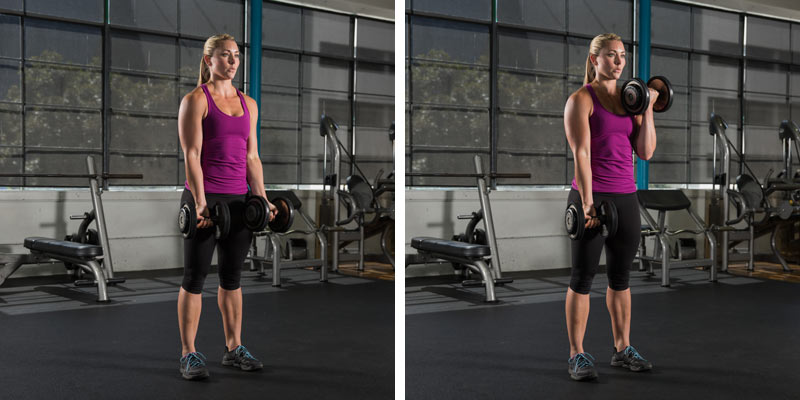
Although it is a smaller muscle group, the biceps can lift some weight when pushing. Include some curl variations in your program, e.g. B. Barbell curls, dumbbell curls, hammer curls or rope curls. Be careful not to look for momentum. If you feel your back starting to arch, it's probably time to lower the weight.
Triceps kickback

Show off that “horseshoe” by sculpting those triceps. For this exercise, you will need a pulley and an attachment such as a straight bar, rope, or V-bar. Start with your arms at 90 degrees and push down until your arms are perpendicular to the floor. Stop at 90 degrees on the way up. Remember to keep momentum out of the equation to really isolate the triceps and shape those arms.