

 Suche
Suche


Coming back from an injury can be challenging and frustrating, but don't let it get the best of you. Take your time, stick to your training, and recognize when you need help. Consult personal trainers, physical therapists and your doctor. and follow these fitness tips to get back to your fitness routine.
Form and function
Proper training form is always important but absolutely essential when returning from an injury. At the very least, review proper form for each exercise that involves the previously injured area. If you have any questions, contact one of the personal trainers at your gym. You can search for ACE certified professionals in your area here.
No matter the exercise, these pointers will help you maintain good form:
1. Keep your spine long. This ensures good posture without overcorrection.
2. Relax your shoulders. Stress and computer time make shoulders tight. Let go of that stress and your shoulders will sit naturally.
3. Move from your hips. During full-body and lower-body exercises, movement originates from your hips. Keep your spine long and move away from your hips to avoid lower back involvement.
Choose the right exercises
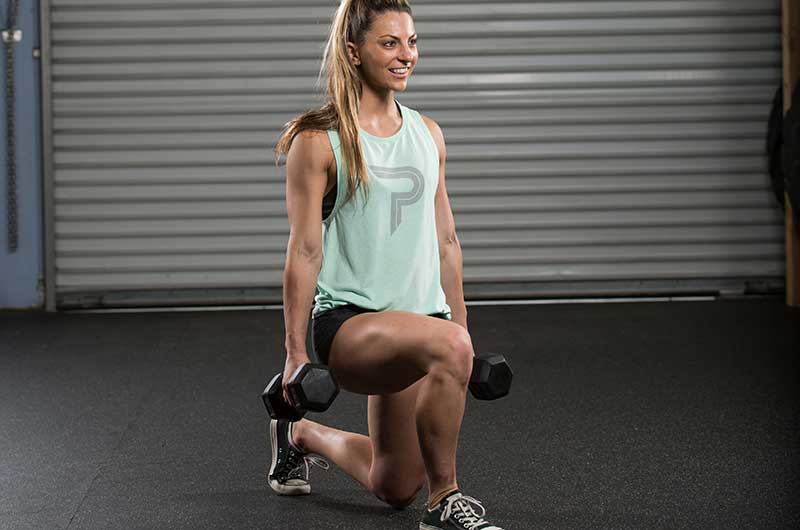
It can be difficult for the ego to improve your exercises, but that's exactly what you need to do when returning to training after an injury. Either choose an exercise that is less demanding than the exercises you were doing before the injury or limit the weight and range of motion of the exercises.
For example, if you're returning from a knee injury, reduce the weight of your squats and then squat only as far as you can while remaining pain-free. When you first come back, you may even want to remove the weights altogether and limit yourself to bodyweight exercises.
Then, every time you do squats, test your range of motion to see if you can go a little deeper without pain. Over time you can achieve full range of motion. You can then safely increase the weight you lift.
Pain is your friend
Pain is your body's way of letting you know something is wrong. Stay away from painkillers before exercising so you can listen to your body. If your injury site hurts during exercise, you're doing more harm than good. Do you notice pain during an exercise? Try some or all of these tips:
1. Limit your range of motion to stay within a pain-free range.
2. Switch to another, pain-free exercise.
3. Reduce the weight used.
This can be the difficult part of getting back to training. If you have limited knowledge of exercise modifications or variety, you may have a difficult time finding a pain-free exercise that also strengthens the previously injured area. In this case, it's time to find a physical therapist with strength training knowledge or a personal trainer with injury recovery knowledge.
Active recovery is a must
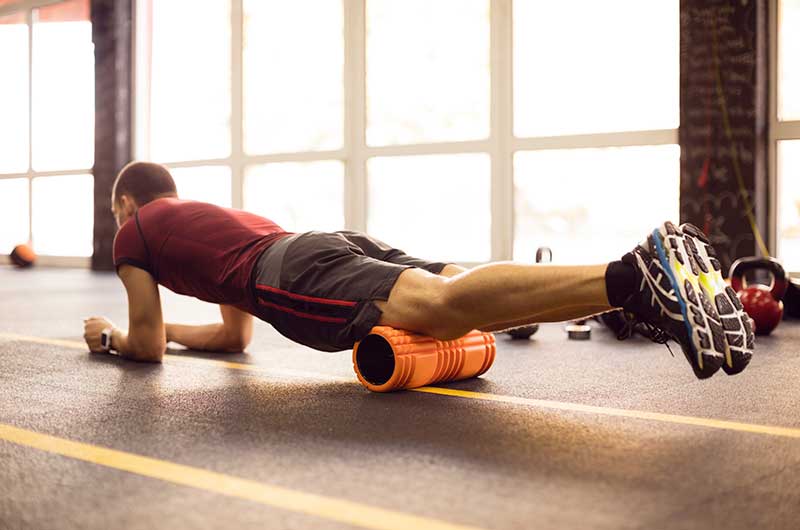
Active post-workout recovery can mean different things depending on your goals. After the injury, I recommend the following:
- Da sich die meisten von uns keine wöchentliche Massage leisten können, verwenden Sie eine Schaumstoffrolle, um die Muskeln um die Verletzung herum tief zu massieren.
- Kryotherapie ist eigentlich nur Eis! Obwohl es beliebte und teure Kryotherapie-Behandlungen gibt, sind ein 20-minütiger Eisbeutel nach dem Training oder ein Bad in einem kalten Pool eine großartige Möglichkeit, die Vorteile der Kälte zu nutzen.
- Bleiben Sie hydratisiert und essen Sie gut. Stellen Sie sicher, dass Sie jeden Tag genug Wasser trinken und die Nährstoffe erhalten, die Sie für Ihr Trainingsniveau benötigen.
- Bemühen Sie sich besonders, sich zu dehnen. Beenden Sie Ihr Training mit einer Schaumstoffrolle und einer Dehnungsroutine für die Muskeln, die Ihre Verletzung umgeben. Konzentrieren Sie sich auf tiefe, lange Strecken. Halten Sie die Dehnung mindestens 60 Sekunden lang. Behalten Sie auch hier eine schmerzfreie Position bei. Versuchen Sie einen sanften oder erholsamen Yoga-Kurs, um Hilfe beim Finden großartiger Strecken zu erhalten.