

 Suche
Suche
Purple Heart recipient Charles Eggleston tees off for physical and mental fitness
When Charles Eggleston steps onto a golf course, he does much more than just try to hit a ball off a tee into a hole. He takes another step on an incredible journey that has inspired thousands of people, including presidents, golf legends and everyone who had the opportunity to hear him tell his story. The Salute Military Golf Association (SMGA) supporters and players credit the game with helping him improve his fitness, not just what you see when he hits a shot. For him, golf is much more than that. “It’s also mental fitness, which…

Purple Heart recipient Charles Eggleston tees off for physical and mental fitness
When Charles Eggleston steps onto a golf course, he does much more than just try to hit a ball off a tee into a hole. He takes another step on an incredible journey that has inspired thousands of people, including presidents, golf legends and everyone who had the opportunity to hear him tell his story. The Salute Military Golf Association (SMGA) Supporters and players credit the game with helping him improve his fitness, not just what you see when he takes a shot. For him, golf is much more than that.
“It’s also mental fitness, the structure of fitness,” said the Purple Heart and Bronze Star winner. Understand why mental fitness is so important For him, you have to understand the journey he took to get to the point where he is today.
Growing up, Eggleston was a fan of The A-Team, including Mr. T, he played with GI Joe action figures, and the theme of his interests seemed to revolve around the military. He described the soldiers who fought for their country in his youth as “superheroes”. So it made sense that he would register himself later. He actually gave up a career as a computer engineer in Washington, D.C. when he made this decision. His mother wasn't happy with this decision after she found out.
“When my mother found out, she went crazy,” Eggleston remembers. "She said, 'What the hell? You make six figures, you've done everything you need to do in life, you don't have to do this.'"
However, by the time his mother found out about his choice, it was already too late because Eggleston was already in basic training. She asked why he made the decision her son did, but he was actually wondering why he couldn't serve.
“The transition was when I started telling myself, ‘I’m getting all this, I’m basically getting, and I haven’t given anything to this country.’ It was just an epitome for me that I decided to let myself go into the military.”
Charles Eggleston made that commitment, and it was a great commitment. Within weeks of the September 11 attacks on the United States, he was sent to Iraq to participate in combat. He explained that what people in this part of the world perceive as war is very different from what it really was.
"It was urban with a mix of jungle warfare. When most people think of Iraq, they think of a place full of sand. No, it's very woody in places," he revealed. “Palm trees and bush areas, there are lots of places to hide.”
Eggleston's team was among the first sent there, and he returned to the United States after completing that mission. He would actually be sent back for another mission.
The second trip was even more intense because the opposition had more instruments of war, including IEDs. Eggleston's team suffered the effects of one of these IEDs. Eggleston was injured so badly that he thought he would die too. When he received medical attention, they almost amputated his leg because they mistook someone else's X-rays for his own. Eggleston survived, but he had to undergo well over 50 surgeries during his recovery after returning to the United States. He expressed that part of what he calls “The Journey” involved a lot of rehabilitation and took a toll on both his mental and physical health.
"I had to relearn everything. It still pisses you off when you think about having to recalculate everything about yourself as a person," he said solemnly. "It became a joke to some outsiders. I can understand children saying something, but some adults did too. I had beams that went through my legs and I had a special apparatus that helped me walk most of the time," he recalled. "Kissing fate in the face changes your soul. When you smell death without passing it on, it's different."
Charles Eggleston spent the rest of his military career recovering Walter Reed Army Medical Center. However, his most famous service was when he was in the hospital. The conditions in which service members endured during this time were substandard, and Eggleston made that clear to President George W. Bush when he came in to express his gratitude to those in attendance.
"They were taking notes big time. I remember him saying, 'We're going to fix this.'"
This encounter would lead to what is known as “ Walter Reed scandal.” and Eggleston's speech resulted in the hospital being temporarily closed. In the end, dramatic changes in the treatment of residents in the future. Many veterans who have received medical care since then can thank Eggleston for the improvements made.

The game that changed Charles Eggleston's life
As he worked through recovery, Eggleston had another visitor who would help him change his life for the better. PGA golfer Jim Estes visited him and wanted to take him on a golf trip.
“He said, ‘I’m going to fix you through fitness,’” Eggleston recalled. “I still remember that.”
This offer was initially met with resistance, but then Estes upped the ante in the form of a $100 bet. If Eggleston didn't have fun, Estes would give him the money. If he did, there would be no debt to pay.
The duo went to Chevy Chase Country Club to play. PGA legend Phil Mickelson was also there that day PGA pros like Bubba Watson. When Charles Eggleston came to the tee, he hit a clean shot down the fairway. The same thing happened on another tee shot. The challenge of accurately hitting that little white ball was a mental challenge for the veteran, who expressed his gratitude for the moment.
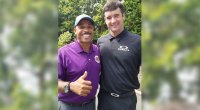
“Golf became my salvation,” Eggleston said. "If anyone ever asks me about my story, golf saved my life. It became a new beginning for my new journey."
Charles Eggleston gradually improved at the game, rubbing shoulders with many other pros, including 15-time major winner Tiger Woods. Woods and other athletes reached out and offered Eggleston support and friendship because they were inspired by his experience and his ability to overcome the adversity he faced along the way.
While he enjoys spending time with those who are considered the best in his sport, his greatest benefit has been helping him reclaim his mental and physical well-being. He still lifts weights at least four days a week and plays as often as he can. He is ranked as one of the top Wounded Warrior golfers in the nation and he plans to enjoy the gift he has been given for a long time to come.
"Golf has helped me release what we call the juice, the bad things in war and life. Physical fitness has given me something that no one can take away from me. I can't wait to smell that the next day. Physical fitness is the silver bullet for so many bad qualities."
.
Source: muscleandfitness