

 Suche
Suche
Abdominal exercises that can help heal diastasis recti
During pregnancy, your body goes through many changes. And despite what celebrity tabloids might have you believe, giving birth doesn't exactly mean everything goes back to normal for new moms. (It's also not realistic to get right back to your pre-pregnancy weight, as fitness influencer Emily Skye proves in this two-second transformation.) In fact, research suggests that between one and two-thirds of women suffer from a common post-pregnancy condition called diastasis recti, in which your left and right abdominal muscles separate. “The rectus muscles are the ‘strap’ muscles that extend from the ribcage...

Abdominal exercises that can help heal diastasis recti
During pregnancy, your body goes through many changes. And despite what celebrity tabloids might have you believe, giving birth doesn't exactly mean everything goes back to normal for new moms. (It's also not realistic to get right back to your pre-pregnancy weight, as fitness influencer Emily Skye proves in this two-second transformation.)
In fact, research suggests that between one and two-thirds of women suffer from a common post-pregnancy condition called diastasis recti, in which your left and right abdominal muscles separate.
"The rectus muscles are the 'strap' muscles that extend from the ribcage to the pubic bone," explains Mary Jane Minkin, MD, clinical professor of obstetrics, gynecology and reproductive sciences at Yale University. “They help us stay upright and hold our bellies.”
Unfortunately, these muscles have to stretch quite a bit with pregnancy. "In some women they stretch more than others and a gap develops. The abdominal contents can 'flow out' between the muscles, similar to a hernia," she says.
The good news is that unlike a hernia, where your intestines can leak out into the hernial sac and get stuck, this doesn't happen with a diastasis, explains Dr. Minkin. And a diastasis isn't usually painful (although you may feel pain in your lower back if your abdominal muscles are stretched and not working as they normally would). Still, if you're suffering, you can appear pregnant even months after your baby is born, which can clearly be a confidence killer for new mothers.
That's exactly what happened to Kristin McGee, a New York-based yoga and Pilates instructor, after she gave birth to twins. "A few months after giving birth, I had lost a lot of the weight I had gained, but I still had a pouch over my belly button and looked pregnant, especially toward the end of the day."
Dr. Minkin points out that women carrying twins may be at increased risk of diastasis recti because the muscles can be stretched even more.
How to heal
The good news? No matter your situation, there are certain steps you can take, both before and after birth, to avoid (or deal with) diastasis.
To keep stretching to a minimum, first, try to stay as close to your ideal body weight as possible before your pregnancy, and try to stay within the weight gain range your doctor recommends for you during pregnancy, suggests Dr. Minkin before.
If you still have diastasis after a year, Dr. Minkin notes that you can also consider surgery to stitch the muscles back together — although she notes that it's not 100 percent necessary. "It's not a health risk, so there's no harm in ignoring it. It really depends on how much it bothers you."
Fitness can also help. Many abdominal exercises (before, during and after pregnancy) strengthen the rectus muscles and counteract possible stretching. With the right arsenal of exercises, McGee says she was able to heal her diastasis without surgery.
You just need to make sure to focus on movements that will help strengthen and heal you in a safe way. "While healing your diastasis, you should avoid exercises that put too much strain on the abdominal muscles and can cause the stomach to taper or bulge," says McGee. "Crunches and planks should be avoided until you can hold your abs and avoid any pooping." You should also avoid backbends or anything that can cause the stomach to expand further, she notes.
And if you have diastasis, focus on contracting your abdominal muscles even during daily activities (and be careful if you notice that certain movements bother you), says McGee. But after getting the green light from your gynecologist (usually around four to six weeks postpartum), most women can begin gentle hip bridges and these McGee moves, which aim to tighten the midsection and heal a diastasis in an easy, effective way.
TVA breaths

Photo: Kristin McGee.
How to do it:Sit or lie down and breathe through your nose into the back and sides of the waist. As you exhale, open your mouth and breathe out the sound “ha” over and over again as you focus on the ribs moving towards each other and the waist narrowing.
Why it works:"This is extremely important because the breath is so connected to the core, and after you have a baby, your ribs spread to make room," says McGee. (Re)learning how to breathe with the diaphragm allows the area to come together again, she notes.
Bridges
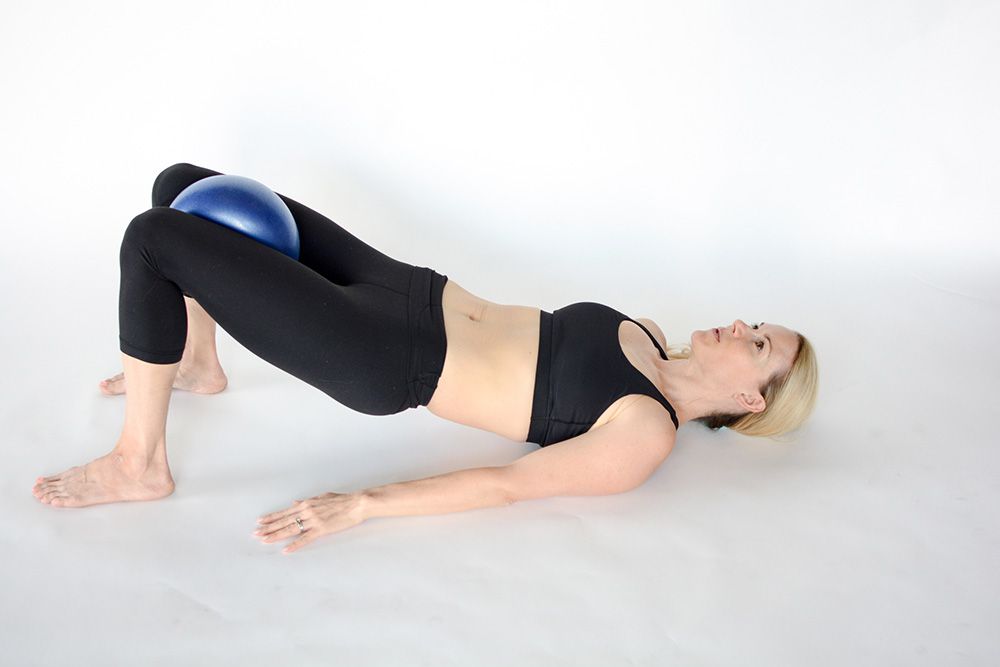
Photo: Kristin McGee.
How to do it:Lie faceup with knees bent, hip-width apart, feet flexed (toes toward shins and pulled up off the floor) and arms at your sides. Engage abs and press down through heels to lift hips (avoid arching back) and squeeze glutes. Place a ball between your thighs and press in to increase the difficulty.
Why it works:"With bridges, it's very easy to pull your belly button toward your spine and find neutral pelvis," says McGee. This movement also strengthens the hips and glutes, which can help support our entire core region.
TheraBand arm band
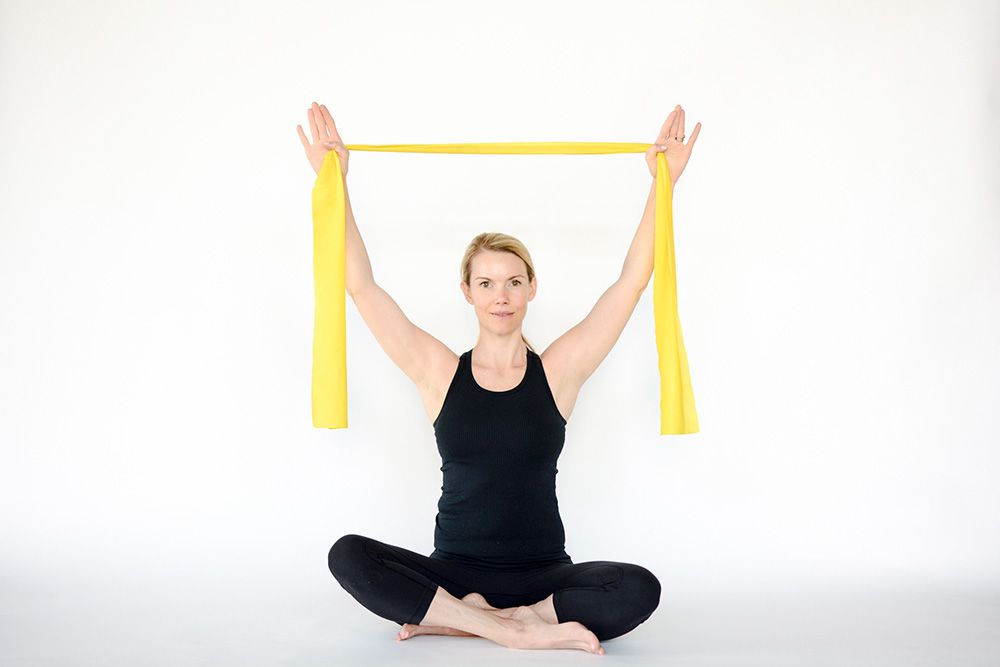
Photo: Kristin McGee.
How to do it:Hold a TheraBand in front of your body at shoulder height and pull the band apart while pulling your abdominal muscles in and up and contracting your ribs. Bring the band over your head, then return to shoulder level and repeat.
Why it works:“Using the band helps us really activate and feel our abdominal muscles,” notes McGee.
Toe taps
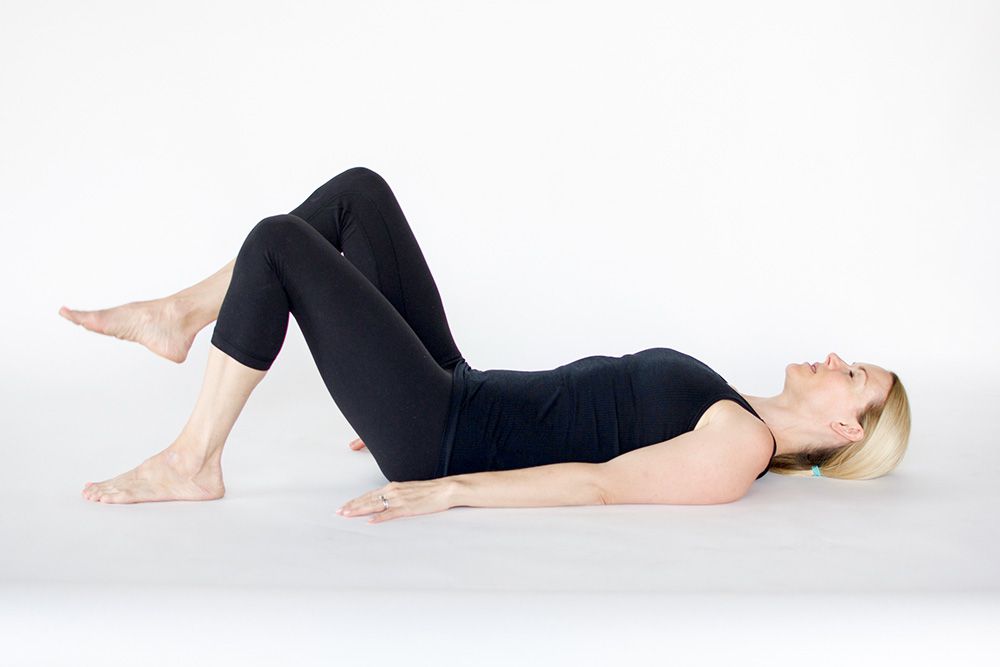
Photo: Kristin McGee.
How to do it:Lie on your back and raise your legs to the tabletop position with a 90-degree bend in the knees. Tap your toes on the floor and switch legs.
Why it works:“We often lift our legs from our hip flexors or quads,” says McGee. “This movement helps us reach the deep core to feel that connection, so we stay strong in our core as we move our limbs.”
Heel slips
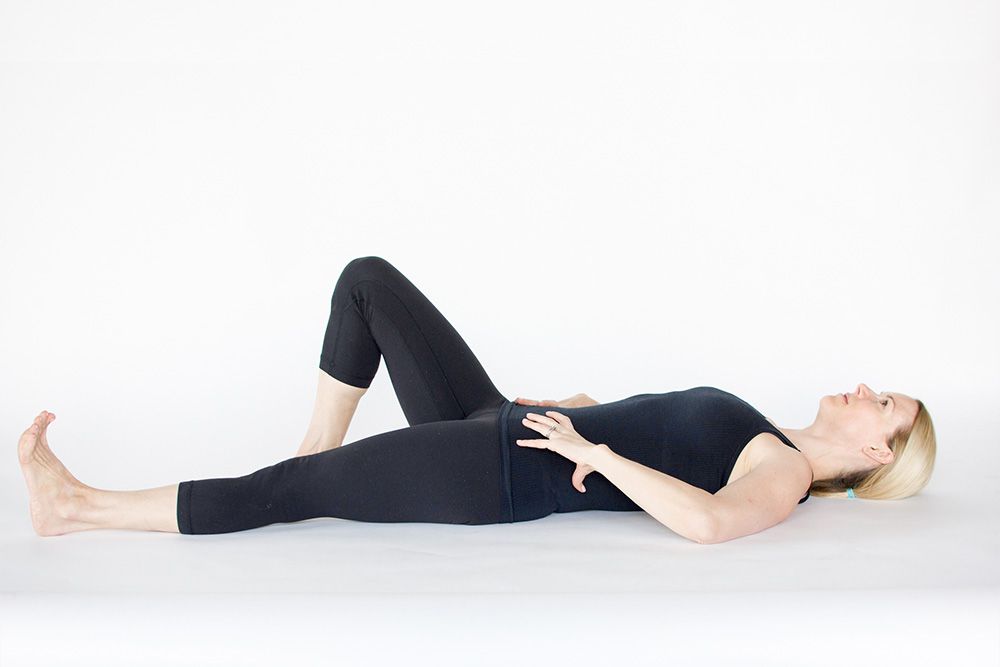
Photo: Kristin McGee.
How to do it:Lie on your back with your legs bent, slowly extend one leg forward on the mat and let it hover above the floor while keeping your hips still and pulling your abdominal muscles in and up. Bend the leg inward again and repeat on the other side.
Why it works:"When we do this, we begin to feel the length of our limbs while remaining connected to our core," says McGee.
clams
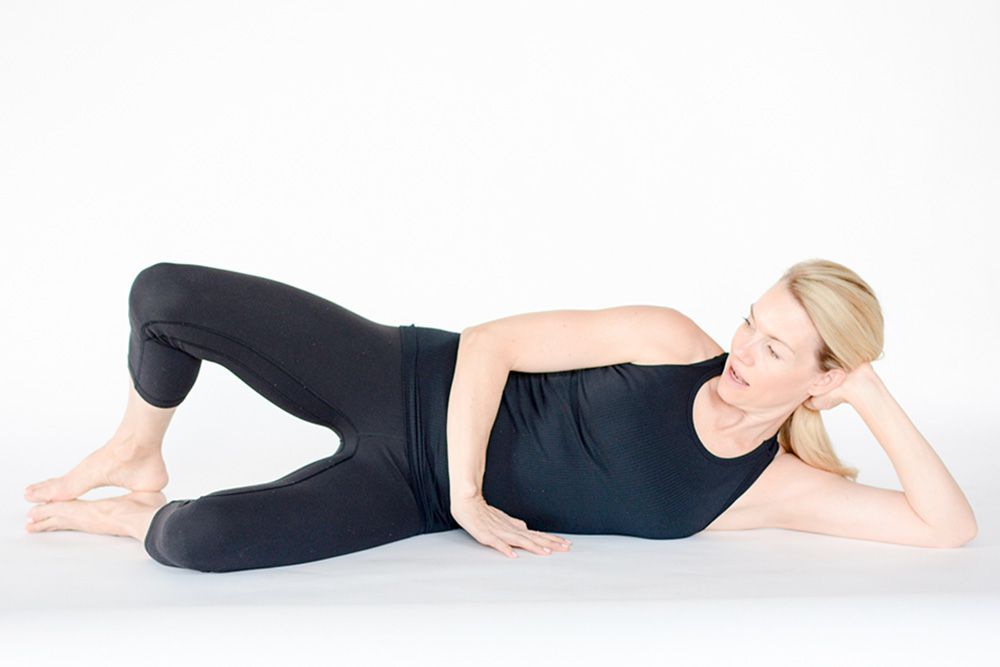
Photo: Kristin McGee.
How to do it:Lie on your side with your hips and knees bent at 45 degrees, legs stacked. Keeping your feet in contact with each other, lift your top knee as high as possible without moving your pelvis. Do not let your lower legs lift off the ground. Pause, then return to the starting position. Repeat. Place a band around both legs just below the knees to increase difficulty.
Why it works:“Side-lying exercises like clams utilize the obliques and strengthen the outer hips and thighs,” says McGee.