

 Suche
Suche
The 3 Injuries You're Most Likely to Get This Spring
After spending the long, cold winter months working out on treadmills and doing things other than your favorite activity - running outside - it's finally warm enough to do your workout outside. But before you jump on a total pavement or trail binge, take a step back to avoid injury, says Andrew Gerken, MD, a foot and ankle specialist and orthopedic surgeon at Hoag Orthopedic Institute in Irvine, CA. "The best approach is a step-by-step strategy. Plan where you want to be in the next few months so you can enjoy a great summer. If your...

The 3 Injuries You're Most Likely to Get This Spring
After spending the long, cold winter months working out on treadmills and doing things other than your favorite activity - running outside - it's finally warm enough to do your workout outside.
But before you jump on a total pavement or trail binge, take a step back to avoid injury, says Andrew Gerken, MD, a foot and ankle specialist and orthopedic surgeon at Hoag Orthopedic Institute in Irvine, CA. "The best approach is a step-by-step strategy. Plan where you want to be in the next few months so you can enjoy a nice summer. If your goal is to run a half marathon, you need to train regularly for six months beforehand, even thinking about doing a 5K." Even if you've been keeping up with your indoor workouts, running outdoors presents uneven and unforgiving terrain, wind resistance, and other challenges you don't experience on a treadmill. So too much too soon will probably land you in the doctor's office instead of on the running track.
So that you don't sit on the couch and stay on your feet, Gerken (himself a runner) has identified the three most common risks of injury for runners when the weather changes and explained how you can prevent them.
Plantar fasciitis
Thinkstock
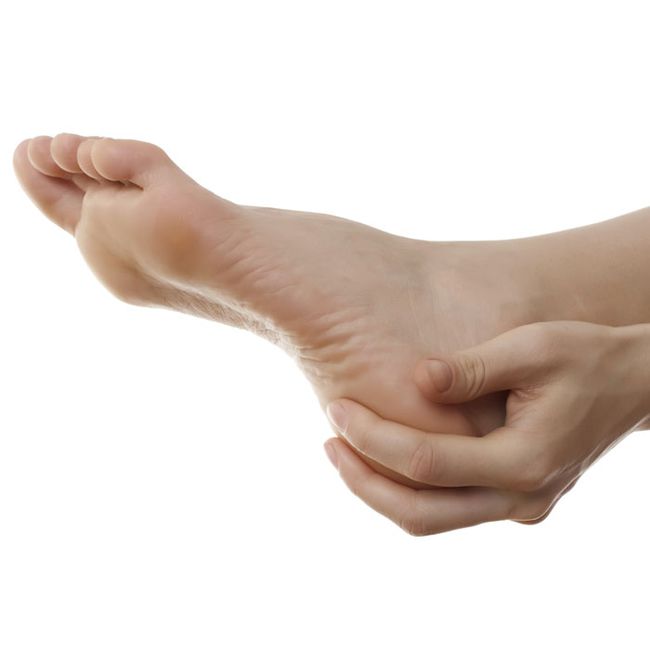
Strain on the plantar fascia, a flat band of tissue that connects your heel bone to your toes, can cause tiny tears in the ligament and lead to pain (usually in the heel) and swelling. It most often occurs if you have high arches or flat feet, walk for long periods of time, are overweight, or have feet that roll inward excessively. Overtraining and neglecting the calf muscles are also culprits, says Gerken.
Prevent it:Start gradually, increasing mileage by no more than 10 percent per week. When running, stay on soft surfaces and stretch your calves after each workout. Gerken also recommends mild, soft arch support. At the first sign of discomfort, use ice (rolling your foot over a frozen water bottle is a great trick) or do a gentle massage: Pull your toes back with one hand and work the opposite thumb along the plantar fascia to loosen it up, suggests Gerken.
Achilles tendonitis

Thinkstock
Running too much too soon—for example, increasing the distance each day instead of giving the body time to adjust to the new distance—can lead to Achilles tendonitis. You will feel pain and stiffness along the Achilles tendon or pain on the back of your heel that gets worse when you run. You may also notice swelling of the tendon. (If you hear a sudden "pop" behind your heel, you may have torn your Achilles tendon; seek medical attention immediately.)
Prevent it:Go easier on your runs. “Use your first mile or so as a warm-up before you go out harder,” says Gerken. If you start to develop symptoms, use ice and stretch your calves or perform this eccentric stretch: Stand with both feet on a step, heels hanging over the edge. Rise on your toes. Bring your left foot behind your right foot. Slowly lower your right foot toward the floor. Stand up on both feet to return to the starting position. Do 10 reps and then switch feet to complete the set.
Patella tendonitis (also known as “Jumper’s Knee”)
Thinkstock
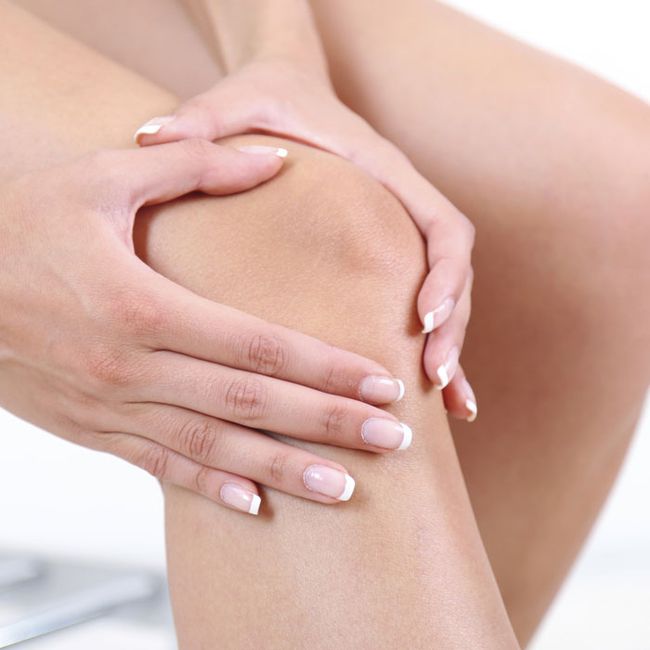
Overuse problems caused by excessive running can cause irritation, strain and swelling of the knee joint. The patella is literally wrapped in a tendon that connects the large muscles in the front of the thighs (quadriceps). “For this reason, tight quadriceps can cause problems,” explains Gerken. Symptoms include pain between the kneecap and shinbone, where the tendon attaches to the bone. It may only become painful at the beginning of running or after an intense workout and eventually make it difficult to climb stairs or get up from a chair.
Prevent it:Regularly strengthening and stretching the quadriceps is key, says Gerken. Strengthen yourself by sitting against a wall with your right leg straight and your left leg bent. Slowly raise your right leg a few centimeters above the floor, hold it and slowly lower it to the starting position. Do 10 reps and then switch legs. Stretch by standing on your left leg and gently pulling your right leg behind you, knee facing the floor. Hold for 20 to 30 seconds, then switch legs.