

 Suche
Suche

You may think that your inability to stick to a plan is due to a lack of motivation or perhaps even a basic lack of willpower.
But willpower isn't what's holding you back. After years of coaching people as a personal trainer, I have found that most people struggle to maintain their momentum because they ignore one simple rule.
It says The Goldilocks Rule.

It's a riff on the old story of Goldilocks and The Three Bears. And although it may seem ridiculous to find what ispreciselyfor you is the secret to better health.
The Goldilocks Rule states that we experience peak motivation when we work on tasks that provide the right level of resistance, challenge, and complication.
In other words, when you take on new tasks that are too easy or too difficult, motivation, focus and consistency collapse.
Let's say you haven't worked out in years and want to get back to the gym this year. You are motivated and excited. Nothing can stop you. So you decide on a 5-day bodybuilder-style training program designed to last 12 weeks. On paper it looks fantastic. The weekly volume and total volume are enough to transform anyone. It has the best exercises and is backed by the latest research in exercise science.
Here's the problem: If you go from training to 5 days a week from zero, the likelihood of success is slim. It's closedlargea jump on each level. From the discipline of walking 5 days a week to the total amount of work (and stress) you put on your body, it's neither practical nor realistic.
Remember that in Goldilocks and the Three Bears the focus was on finding a good fit. Choosing the right program is the same. If you take on too much too soon, it's easy to predict when you'll miss a day or two. The missed days might frustrate you into ending the plan early. Or, the dramatic jump from no training to a lot of weekly volume increases the likelihood of injury, which can lower your confidence.
And that's before we consider the pressure this puts on your calendar. Let's assume that each workout is 60 minutes long. Going from 0 minutes of exercise to 300 minutes of exercise per week is ambitious and monumental.
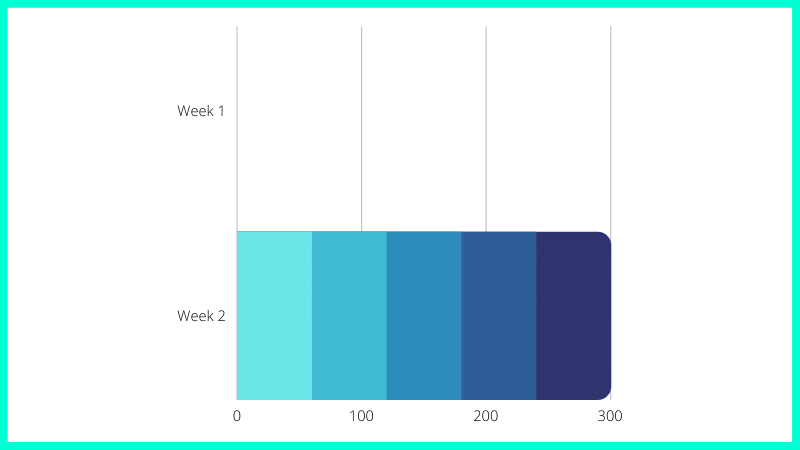
You are told that you have to train a certain way to see changes. In reality, small leaps will still make changes and – as you improve – you increase what you do. It's a cliché to tell people to enjoy the journey, but there's a very real lesson in that wisdom. If you expect too much too soon, you will rarely see the results you want.
How to choose a better way
When motivation is high, you want to believe that you can do anything (and you can). However, achieving your goals means finding a path that makes your success more likely, not just diving headfirst into a plan without considering your starting point.
If you don't take the path into account, the results usually don't follow.
Here's what usually happens: You can complete all of your sessions during the first week (or two) while motivation is high (assuming muscle soreness isn't overwhelming you), but once reality catches up with you, consistency and willpower begin to fade and you lose momentum and drive.
You know what’s all too common with “great” fitness programs? Overuse injuries.
You know what's frustrating about a lot of workouts? Unrealistic schedules and expectations.
Do you know what is not required to see results? Live in the gym or slave at every meal.
Time and time again, the best results come from small changes that you can repeat over and over againwith as little stress as possible.
When you're trying to get back in the game - and win - consistency is your competitive advantage. Although your start may seem slow, it is not.
To find a better way, create a baseline of where you want to start and where you want to end. The baseline can include things like your fitness level, how often you exercise per week, and which meals are light (and heavy).
You don't need a personal trainer to tell you what works on your schedule. You know what is possible to get started. You need to create some friction and change, but it can't be disruptive. In fact, the best personal trainers know that helping you change is less about exercise science and more about creating a plan that works for your life.
Here's a pro tip to always remember when you're struggling: It's important to differentiate and figure out what is "just enough" versus what is ideal. “Just enough” meets you where you are and is doable. And if something is doable, you do it again and again, confidence grows, habits form, behaviors change and you get better.
To ensure this year is different, let your actions produce results. Find a plan that sounds challenging but that you are 95% confident you can do without a doubt in the next 4 to 6 months.
Illustration:The Almanack Of Naval Ravikant: A Guide to Wealth and Happiness

It is better to achieve mastery and progress than to struggle, fail and have to pick yourself up from scratch. And if you ruin the plan, you can always increase the difficulty later.
This approach will help you make small wins early and often, so you can move forward with confidence in the year ahead.

Adam Bornstein is aNew York TimesBest-selling author and, afterThe Huffington Post, “one of the most inspiring resources for health and fitness.” An award-winning author and editor, Bornstein was the fitness and nutrition editorMen's health, editorial director at LIVESTRONG.com, and a columnist forFORM,Fitness for men, andMuscle & Fitness. He is also a nutrition and fitness consultant for LeBron James, Cindy Crawford, Lindsey Vonn and Arnold Schwarzenegger. His work has been featured in dozens of publications includingThe New York Times,Fast company,ESPN,andGQ, and he's appeared on Good Morning America, The Today Show, E! News and The Cheddar.