

 Suche
Suche

High-intensity interval training (AKA “HIIT”) has been a popular training method for years. It is effective and time efficient. However, as time goes on, the methods you refer to as “HIIT” become further removed from the science that has proven the effectiveness of these types of routines.
Just because high intensity is good doesn't mean adding more and more work is better.
The biggest problem with HIIT workouts is that people have taken a great concept (higher intensity, less rest) and destroyed the execution.
The mindset goes something like this:
"If four minutes is amazing, eight minutes must be incredible. And if eight minutes is incredible, 16 minutes must be amazing."
This is the opposite of what you want to do. Adding more time doesn't make all workouts more effective. And with HIIT, one could easily argue that it could reduce the effectiveness of the workout.
Why HIIT workouts are so effective
The name of the game is efficiency. There are many ways to exercise, but scientists are intrigued by high-intensity interval training because, when done correctly, you can see big benefits in less time.
The key to good HIIT programming is doing everything you can to maximize intensity. It's this intensity that allows you to keep workouts shorter and experience benefits like muscle building, fat loss, and cardiovascular improvements that you typically see with longer workouts.
However, if you don't set up your workouts to keep the intensity high, you'll gradually lose the power of HIIT.
In general, HIIT workouts are characterized by:
- Gehen Sie hart (arbeiten Sie mit hoher Intensität, entweder mit schweren Gewichten oder mit vielen Wiederholungen).
- Sich ausruhen.
- Wiederholen.
What makes HIIT so effective is the ratio of exercise to rest.As a decorated strength coach, Robert Dos Remedios explains in this blog postMany of the most popular training protocols are completely backwards when it comes to the work-to-rest ratio.
Translation: People train for way too long, followed by way too little rest.
Coach Dos explainsFor a truly comprehensive effort, you should rest up to 5-6 times as long as you worked.Working out for longer periods of time while resting for shorter ones makes the workout more of a cardio/aerobic challenge - which is fine if that's your goal.
If you go too long with too little rest, you're likely to reduce the intensity of your work, which is what mattersHigh intensityEducation.
What is the best HIIT workout?
If you want HIIT to work for your body (and schedule) and result in body transformation and health benefits ( HIIT workouts are also shown to improve cognition ), then shorter rest periods require shorter training sessions. This is all done to maximize intensity and results. Long HIIT workouts with short rest periods are more likely to lead to burnout and not achieve the desired effects.
In other words, your “working hours” affect your rest times. Following Dos Remedios' recommendations, keep work short and as interval work time increases, ensure your rest time also increases.

An ideal ratio of work to restfor all high-intensity intervalscould be:
- 10 Sekunden Arbeit, gefolgt von 50 Sekunden Pause
- 20 Sekunden Arbeit, gefolgt von 100 Sekunden Pause
- 30 Sekunden Arbeit, gefolgt von 150 Sekunden Pause
That doesn't mean you can't do more frequent intervals like 20 seconds of work followed by 40 seconds of rest.
If you do this, either notice that later sets are lower in intensity, or make sure you do fewer total sets to maintain your intensity.
Finally (and we can't stress this enough) the key to HIIT is intensity. Push your body to maximum power, rest just long enough to reach that intensity, and then get back to work.
How long should a HIIT workout last?
So what's the sweet spot? Everyone will be a little different based on body type, training experience and goals. And there are really two important aspects: how many days per week you should train intensely and how many sets you should do per session.
Craig Marker, Ph.D., associate professor at Mercer University, explains that if you notice a decline in your performance from set to set, you should stop.
"I stop most of my athletes at seven sets because it is difficult to maintain that pace for the full eight. Tabata's team worked with elite athletes.For the everyday athlete, I might suggest even fewer sets, like three to five. (You can Read more about his approach here).
How often should you do HIIT workouts?
Since these workouts take more time to recover from, it is recommended that you perform HIIT workouts 1-3 times per week depending on the overall volume of your workouts.
For example, if you strength train 4-5 times per week, you'll respond better if you only do an additional 1-2 HIIT sessions per week. Otherwise, you'll never recover properly and you won't see as much progress in your training or changes to your body week after week.
If you only weight train 2-3 times per week, you can add 2-3 HIIT sessions per week.
How do I do a HIIT workout?
Using the frequency guidelines above, you can create your own HIIT workout using the exercises of your choice. Follow this two-step process and limit your work sets to 4 to 8 rounds depending on your fitness.
Step 1: Choose the best HIIT exercises
As the name suggests, HIIT workouts should be something that allows you to train at a very high intensity.
If you want to run, you have to be able to sprint. If you want to ride a bike, pedal harder (if you can increase the resistance) or faster. When you swim, swim faster. And when you lift weights, choose a weight that you can lift for about six reps or that allows you to move quickly and explosively (think medicine ball slams).
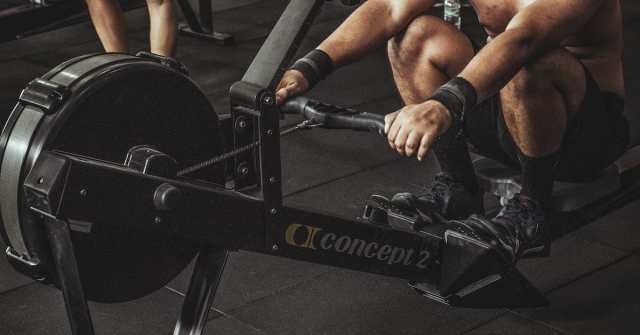
Here are exercises you can choose from (there are many more) to create your HIIT workout:
- Sprint
- Fahrrad
- Ruderer
- Kettlebell schwingt
- Versaclimber oder Treppenstepper
- Springseil
- Reifen dreht sich
- Ausfallschritte springen
- Reinigt
- Triebwerke
- Med Ball knallt
- Kreuzheben oder Kniebeugen
Step 2:Choose how long you want your HIIT workout to last
- 10 Sekunden hochintensive Arbeit.
- 50 Sekunden Ruhe oder Arbeit mit geringer Intensität.
- Wiederholen Sie dies für 4-8 Runden.
OR
- 20 Sekunden intensive Arbeit.
- 100 Sekunden Ruhe oder Arbeit mit geringer Intensität.
- Wiederholen Sie dies für 4-8 Runden.
Step 3: Restore
Remember, intensity isn't just about how much time you need to recoverwhilea workout, it's also what you dobetween training sessions. Remember to rest 5-6 times as long as your work is set to maintain intensity during exercise. Don't do HIIT workouts every day because your overall intensity will eventually decrease, you won't progress from one workout to the next, and this will limit your results.
Now go sweat it out
We've broken down why high-intensity interval training is effective, which HIIT training methods are best, and provided examples of some of our favorite exercises. Remember, the key to proper HIIT training is maintaining high intensity throughout the workout.
Have any questions? Share them in the comments below.
Or if you're looking for more personalization and practical supportOur online coaching program may be right for you. Each client is assigned two trainers – one for nutrition and one for fitness. Find out more here.