

 Suche
Suche

Here's something you won't hear many trainers admit: A long workout warmup—you know, the type that asks you to lather, stretch, or otherwise activate every muscle imaginable—can backfire.
Before you think we're railing against general advice for being counterintuitive, we're not saying warm-ups are bad. All we're saying is that the way they're implemented is flawed and, in many cases, not supported by research.
In fact, all the way back in 2012 International Journal of Sports Physiotherapy,More than 100 studies were reviewed and the takeaway was:
Stretching has not been shown to be effective in reducing the incidence of overall injury. 88While there is some evidence of stretching reducing musculotendinous injuries, 88More evidence is needed to determine whether stretching programs alone can reduce muscle injuries. 3
If you want to reap the benefits of warming up without fearing the typical process, we've tested dozens of different protocols on thousands of online fitness coaching clients and found there's a better way.
The benefits of a warm-up
The value of preparing your muscles for exercise cannot be understated. Your body needs to be ready for the stress of lifting weights, running, or playing sports. When your muscles are warm and prepared, they can produce more force and lift more weight.
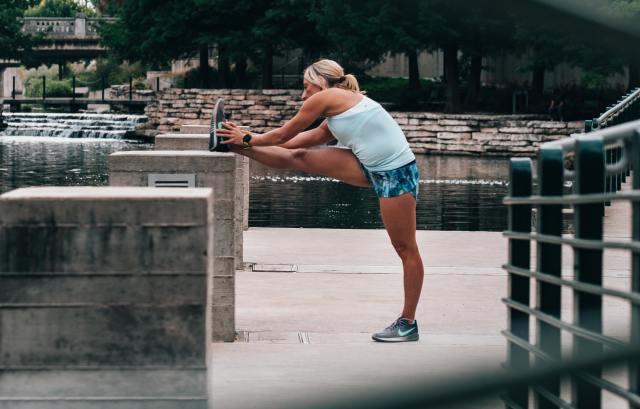
More importantly, preparing a muscle to move, generate force, change direction, or push limits does not happen on its own. If you try to force it. Then injuries happen.
A cold muscle is like a cold rubber band. To understand this, think of the elasticity of a rubber band. You can stretch it and the more you pull back, the more energy you can generate.
Now imagine freezing the rubber band overnight. It changes everything. What was once easy to move is now stiff; What once required an incredible amount of force to break can now easily snap into place.
So warming up your muscles is a good idea. But how you do it doesn't have to follow the usual routine.
How to Design a Better Training Warmup
Most warm-up routines are long and arduous (not to mention uncomfortable), making it something you dread. And because it's right there at the start of your workout, it can feel like a reason not to show up at all, or you skip the warm-up... and get hurt. We've all been through this.
What if you changed everything about your warm-up routine?
Yes, you heard us correctly. We don't say youhavestop warming up. As we've already emphasized, warm-ups are great. But they're not so helpful if they sabotage your motivation to workout.
We therefore recommend another option. Instead of a long warm-up, we focus on just 1-2 exercises to get started. Here's our favorite 1-exercise warm-up.
And then thanks to the advice of our long-time friend and contributing fitness expert Tony Gentilcore, we add Training filler.
Fillers are a way to address problem spots and tight areasduring your training,simply by doing them between sentences. Instead of worrying about all the exercises you need to do before starting your workout, implement strategic exercisesinYour workouts will help you move better, prevent injuries, and train harder.
Basically, you take advantage of your one to three minute rest periods by doing some simple muscle activation exercises or mobility work. (Note the word “simple”. These arenotshould be supersets.)
“We always offer warm-ups to our clients, but we also know that not everyone does them,” says BJ Ward, head coach at Born Fitness.
"That's where fillers come in. We can throw in some moves that help them move better and get stronger without pain while they rest between sets. It doesn't feel like you're doing much, but we end up sneaking in a lot of extra work."
If you're new to training fillers, Gentilcore goes a little deeper into the basics in this post, which also covers fillers for deadlifts. In a second post he explains other techniques to help you squat better.

If you're already familiar with fillers, you should still tune in. Why? Because his deadlift tips are straight to the point. If you've struggled with squats or deadlifts, or just felt "off" every time you attempted them, the mobility exercises he shows can help you move and groove better. (And if there's one thing you need to know about our man Tony, it's that the guy can deadlift like a boss.)
The best warm-up exercises
If you're already sold on fillers or just want some great movement to prepare for your favorite exercises (or heaviest exercises), Coach Ward has your back. Here are some additional movements he recommends as fillers within a workout or as a primary warm-up move before a workout. (Click on a move to view a video demonstration.)
Warm-up exercises for squats
Warm-up exercise for deadlifts::
Bench press warm-up exercise::
Surprised? Here's Ward why a lower body mobility move can help you bench: "Most of us sit all day. The more mobility work we can do to release our hips, the better. And second, opening the front of your hips can help you get into a better position when benching. We ask lifters to place their feet under their knees and squeeze the glutes during the bench press. If you press the front of your With your hips open, it is easier to lock into this position.
How to perform warm-up movements
For each warm-up movement, perform 3-5 reps per side. Do only as many sets as necessary so that you feel a little more fluid, your muscles feel warm, and your range of motion has improved. In many cases just 1-2 sentences are enough.
While we combine these fillers with the “Big 3 Lifts,” you do not have to sit on a bench, squat, or deadlift to use them. Try them between sets of similar upper or lower body exercises.
And remember, for a super efficient warm-up, here's our favorite move that preps your body in under 5 minutes.
Interested in an individual coaching plan?
At Born Fitness we know that every individual is unique. There is no one-size-fits-all plan. Our team can develop a lifestyle plan to help you achieve your goals.
If you like the idea of fillers we talked about above but aren't sure where to start, then more personalization and hands-on supportOur online coaching program may be right for you. Each client is assigned two trainers – one for nutrition and one for fitness. Find out more here.
Tips from other websites:
The surprising scientific benefits of the 5-minute walk
The art of deloading
The Best Stretch for Your Body (In Less Than 5 Minutes)