

 Suche
Suche

How do you know if you're pushing too hard during your workout?
Overtraining is a real phenomenon. ItisIt's possible to exercise so much that you destroy your body instead of building it. But most people never come close to “real” overtraining, which is highlighted by physical breakdowns that are difficult to ignore. This isn't sore muscles or bad days at the gym.
Here are 7 common symptoms of overtraining including:
- Erhöhung der Ruheherzfrequenz und des Blutdrucks
- Schlaflosigkeit-ähnliche Symptome und Schlafstörungen
- Magenbeschwerden
- Gleichbleibend wenig Energie und schlechte Laune
- Veränderungen in Persönlichkeit und Stimmung
- Vermindertes Selbstwertgefühl und Motivation
- Gefühle von Traurigkeit und Apathie
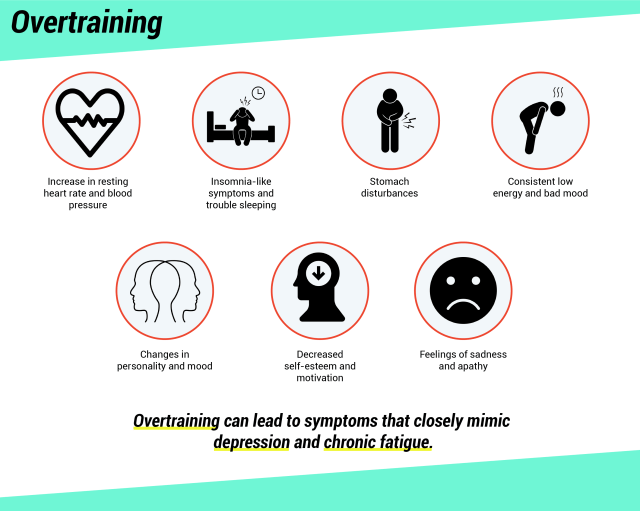
In other words, according to research from the University of Memphis, you experience symptoms that closely mimic depression and chronic fatigue. In severe cases of overtraining, your immune system shuts down and you can suffer from several problems, including upper respiratory tract infections and slow healingJournal of Athletic Training. You can read all about overtraining here.
Overwhelmed trying to figure out the right workout balance? Let our trainers help you.
While this article goes into detail about how to set up your workout, it doesn't cover how to determine the line between intensity and insanity. So if you're worried about pushing too hard, Mike Robertson has the answer. Mike (one of the top strength coaches in the US) explores the different ways to evaluate the intensity of your workouts.
They can be divided into a few options:
Option 1:A self-analysis technique known as RPR/RPE or “rate of perceived recovery” and “rate of perceived exertion.” The RPR scale indicates how you feel in a training session - how well you slept, how tired/sore you feel, etc.
The RPE evaluates how heavy/heavy things feel when you start exercising. And as you'll see in Mike's post, he evaluates it by regularly asking his clients questions about how each movement feels during exercise. Here is an example:
-
- RPE von 10 – Maximaler Kraft- / Grenzhub. Dies ist entweder eine Heckuva-Mühle, oder sie verpassen einen Aufzug.
- RPE von 9 – Schwerer Lift, aber noch eine Wiederholung im Tank.
- RPE von 8 – Schwerer (ish) Lift, aber noch zwei Wiederholungen im Tank.
- RPE von 7 – Mäßiges Gewicht, mehrere Wiederholungen im Tank
Option 2:Assuming you don't trust taking subjective measurements. You want data. Well, there are some tests you can use to improve your physical readiness.
For example, the vertical jump is a fairly accurate predictor of how tired you are ( see study here ). If your gym has one of those jump height sticks (you know, these things ), you can use this as a self-assessment tool. Jump before training / after warming up. If you're at or above your usual total, you're probably ready to go.
If you're a few inches lower, you're more tired than you think and may want to scale back the session - or even make it an active recovery day.
Option 3:If you don't like jumping but still want data, no problem. A less obvious way to test your readiness is with a simple hand dynamometer that can measure hand strength. Studies show that hand strength is a reliable indicator of strength on a given day ( Example here ).
And if you push and push, but a few points lower than usual, you're more tired than you know.
How can you use all of this?
When you get to the gym and start doing your “work sets” (not your warm-up), stop and assess how you feel. The weight on the bar might be similar to previous workouts, butHow do you feelis probably different. And this is your body trying to give you helpful information to get the most out of your session.
Instead of sticking to your exact plan, if the weight feels "heavier" than usual and you're exhausted, you can still get a great workout in without grinding away unnecessarily. While you're training, this is the holy grail of feeling in control.
Push harder when your body says you can, and go easier when you realize you're a little overworked. It's an approach that's more likely to keep you consistently in the gym, feeling good, and making improvements.