Suche
Suche
The 12-week marathon training plan for advanced runners
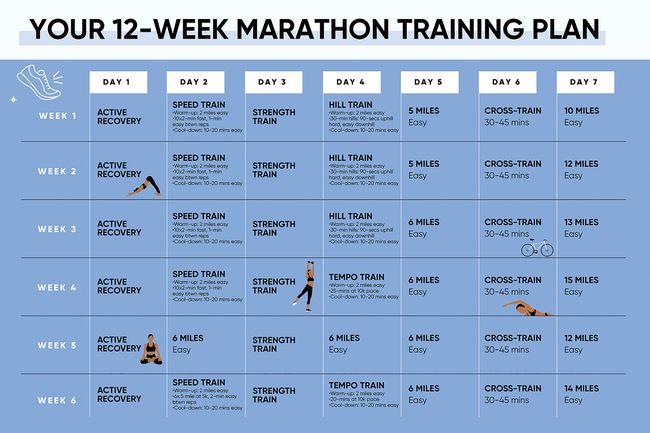
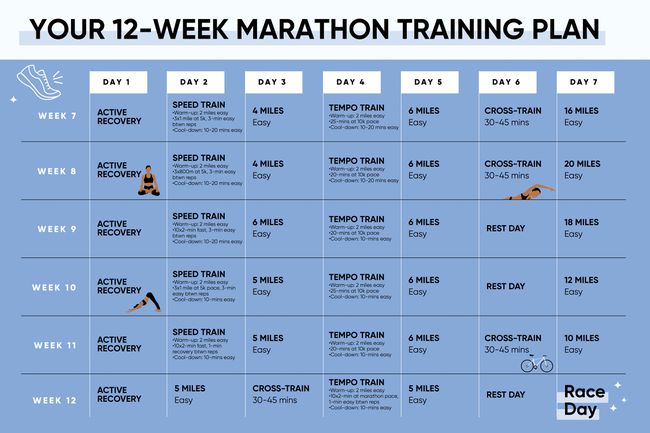
So you want to run (another) marathon. You are at the right place. Developed by running coach Michelle Portalatin, CSCS, with input from Rebeka Stowe, CSCS and Nike+ Run Club Coach, this 12-week training plan is designed for intermediate runners who have already run their first marathon and are consistently hitting 25-mile weeks. Here's a breakdown of the different components that make up your 12-week marathon training plan (see below for the printable schedule), as well as tips for setting your pace. What to Include in Your 12-Week Marathon Training Plan Active Recovery/Rest Days The day after your long run is all about...

The 12-week marathon training plan for advanced runners
So you want to run (another) marathon. You are at the right place. Developed by running coach Michelle Portalatin, CSCS, with input from Rebeka Stowe, CSCS and Nike+ Run Club Coach, this 12-week training plan is designed for intermediate runners who have already run their first marathon and are consistently hitting 25-mile weeks.
Here's a breakdown of the different components that make up your 12-week marathon training plan (see below for the printable schedule), as well as tips for setting your pace.
What to Include in Your 12-Week Marathon Training Plan
Active recovery/rest days
The day after your long run is all about rest and relaxation. Yoga is great for runners because it counteracts the pounding, tightening, and shortening of muscles that occurs when running. It's also great for targeting muscles that need stretching, like the hips and hamstrings. (See: 11 Yoga Poses Every Runner Must Know) As an added bonus, yoga can help with your posture and keep your chest open so you can breathe better (aka more oxygen to your muscles and improved efficiency).
Yoga isn't for you? Use this day for a walk or a rest day. Just make sure you incorporate stretching and solid self-care into your 12-week marathon training plan in one way or another to avoid overtraining or injury.
Strength training days
The weight room is critical for runners to increase performance, prevent injury, and keep you strong when you feel like you can't lift your legs at mile 25. Experts recommend moves like squats and deadlifts, which are great for firing up your hamstrings and glutes (important since runners tend to dominate quads), and using free weights to activate your core muscles and challenge your balance, which can help prevent injuries. (By the way, runners also need balance and stability training.)
Cross training days
The purpose of cross-training is to build muscle you wouldn't normally use while running and increase your aerobic capacity to make you faster and more efficient. Some research has shown that HIIT training with minimal rest on a bike can be an effective option, but if cycling isn't for you, you could also try swimming, rowing, climbing stairs, or another activity you enjoy. (Related: The 5 Essential Cross-Training Workouts All Runners Need)
Note:While Day 6 of the 12-Week Marathon Training Plan indicates cross-training (30-45 minutes of aerobic exercise without running), you can opt for a rest day instead.
Hill, speed and tempo runs
This 12-week marathon training plan includes rides, hills, tempo and interval runs to improve your endurance. “Hills are a great place to start training because they help develop leg strength and benefit biomechanics by encouraging use of the posterior chain,” explains Stowe. “Hills often lead us to more ideal ground contact time and increased cadence.” Starting the first three to four weeks of training with hills is great because it develops strength and puts the focus on effort rather than pace, she adds. (Wait, what is the average marathon time?)
This is how you determine your pace
The easiest way to figure out your pace for the tempo runs (which are crucial for training your body to maintain speed over any race distance) is to use a recent race performance or a one- or two-mile time trial result as a starting point, explains Stowe. A great resource is the VDot02 Calculator, which takes the work out of determining equivalent performance times and helps you determine upcoming performance goals. You can then start to think in terms of “current pace vs. target pace” or use the training paces they give you for 10K pace, 5K pace, and interval/kilometer pace to support your 12 week marathon training plan. The app also offers you an “easy” pace that allows you to still comfortably carry on a conversation. (And seriously, don't be afraid to JUST GO on easy days, says Stowe.)
Your 12-week marathon training plan