Suche
Suche
What is a Fartlek Run?
A fartlek run sounds like some kind of terrible gastrointestinal problem that you might face after running too many miles. Fortunately, the reality is much less intimidating. In fact, a fartlek run is an essential type of running in your training program. Here's what you should know about fartlek training and how to add fartleks to your running routine. What is a Fartlek Run? "The word 'fartlek' comes from Swedish and means 'slow game' or more generally 'slow fast,'" explains Lisa Reed, a certified strength and conditioning specialist from Napes, Florida. Basically, a fartlek is a type of run where you maintain your speed throughout...

What is a Fartlek Run?
A fartlek run sounds like some kind of terrible gastrointestinal problem that you might face after running too many miles. Fortunately, the reality is much less intimidating. In fact, a fartlek run is an essential type of running in your training program. Here's what you should know about fartlek training and how to add fartleks to your running routine.
What is a Fartlek Run?
"The word 'fartlek' comes from Swedish and means 'slow game' or more generally 'slow fast,'" explains Lisa Reed, a certified strength and conditioning specialist from Napes, Florida. Basically, a fartlek is a type of run where you vary your speed throughout rather than going at a steady pace.
How to start running for beginners
“Fartlek workouts involve fast or intense running, interspersed with periods of active recovery (jogging),” she explains. Your bouts of fast running shouldn't be all-out sprints, but rather be closer to your 5K pace or an effort of eight out of ten on the perceived exertion scale (FYI, here's what that means). During your slower periods, you should run at a pace where you are able to hold a conversation so that you can fully recover.
In theory, a fartlek is a type of interval training, but it's special because you never really stop and rest. “Fartlek workouts differ from interval running because of the work-to-recovery ratio,” says Reed. "During a fartlek workout, you alternate between fast and slow running. At intervals, you switch from speed to walking or complete rest." TL;DR: During a fartlek run you never stop running.
Why you should try Fartlek training
To run fast, you need to train fast - that's why any type of speed training is important in a runner's training plan. This particular type of speed is important because fartlek runs teach you to relax and recover without stopping, picking up the pace again when necessary.
How tempo running can make you a faster, more efficient runner
“I like to think of fartlek runs as an opportunity for my athletes to do speed training without the stress of feeling like they have to meet specific interval times,” explains Kim Peek, a USA Track and Field certified running coach. “A fartlek run helps runners learn that they have more than one speed and that they can also slow down [down] without walking, to a pace that allows their heart rate to recover after a harder effort.”
Fartleks can help you understand your effort or intensity level when running without relying on data from a watch or treadmill - an important skill for competing in long-distance events like a half or full marathon. “Runners tend to become dependent on their watches,” says Peek. “A fartlek run teaches you to be adaptable and run based on how you feel rather than worrying about pace and time goals.”
How mindful running can get you past mental obstacles
“Fartlek runs help increase endurance while building speed,” explains Peek, because they tax both the anaerobic and aerobic systems. By incorporating different types of runs into your training plan (such as fartlek, interval, or steady-state runs), you can train multiple energy systems in your body, which can improve your performance on race day and make you fitter overall.
How to do a fartlek running workout
“A fartlek can run as hard or as easy as you need it to be,” says Peek. Don't you feel well? Use your fartlek run to alternate between a light jog and a steady running pace. Or, if you're up for a challenge, push yourself by alternating between your conversational pace and hard sprints.
By definition, fartleks should be unstructured. This makes them an easy running interval workout that you can do on your own. “When you listen to music, let the song dictate your tempo,” suggests Peek. “Run at an easy pace during the verse and pick things up during the chorus.” Or, "Use landmarks as guides to change your pace. Run [past] five trees at an easy pace, then run harder for two," she adds.
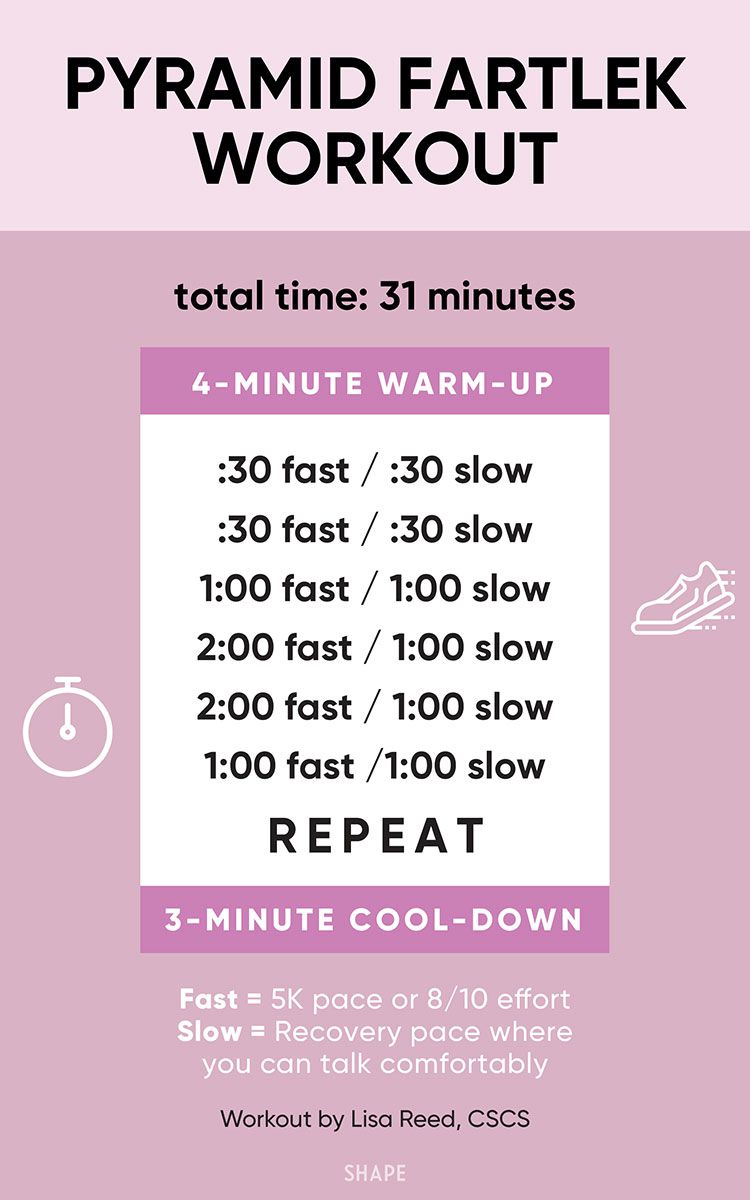
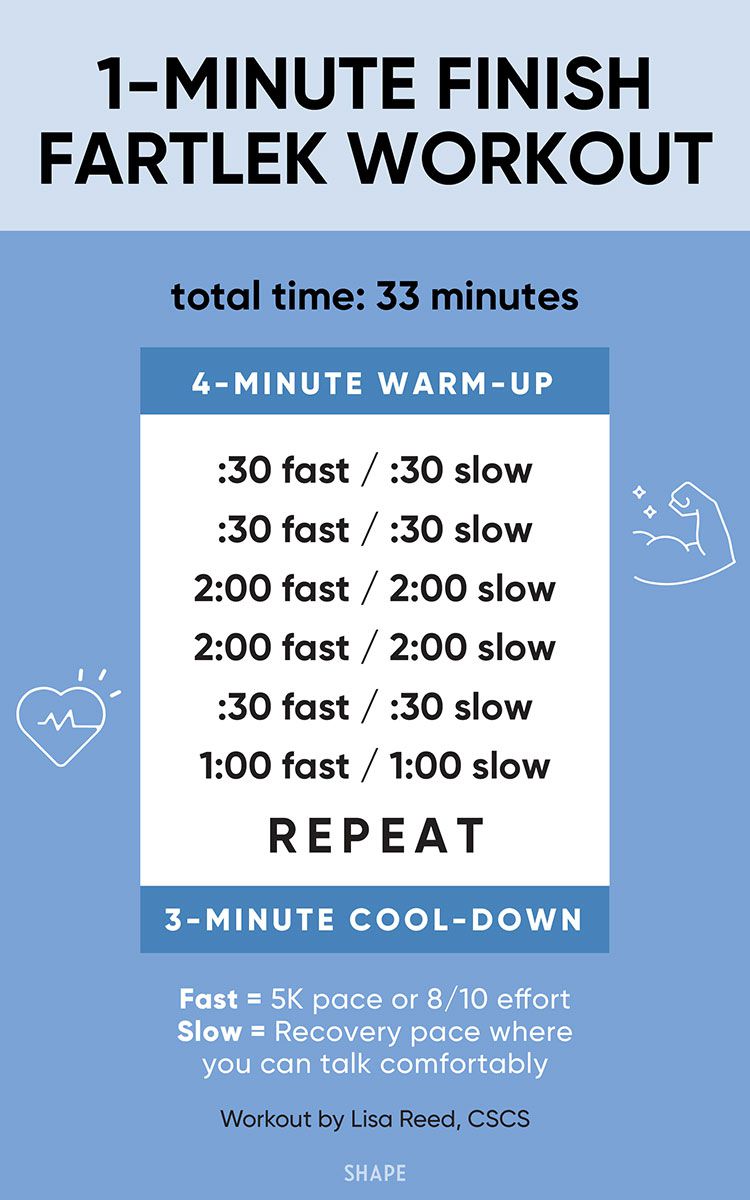
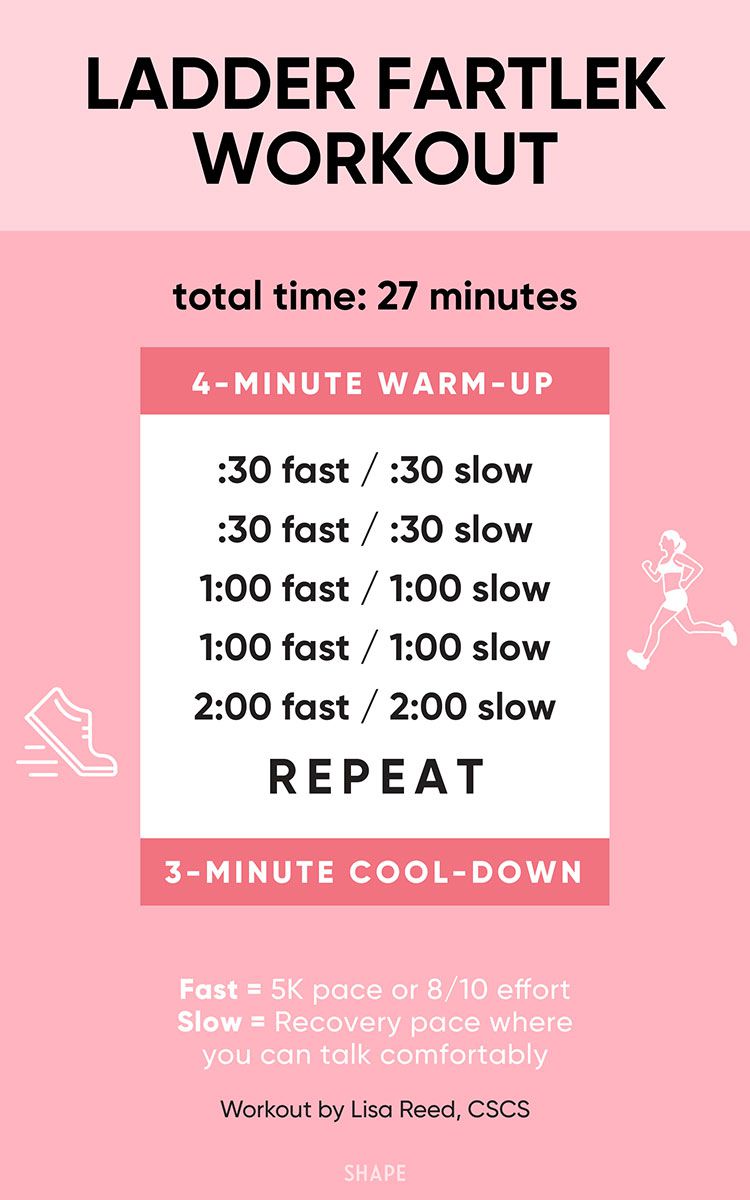
If you prefer something more structured (just for guidance), try one of Reed's fartlek workouts below. You can do them on a track or on the road or trail. “Everyone starts with a four-minute warm-up of light jogging, immediately followed by the fartlek,” she explains. You'll continue to alternate between hard fartlek efforts and slower recovery runs before finishing with a three-minute cooldown period of walking or jogging. (If you want a quick, intense treadmill workout, try this 20-minute HIIT treadmill workout instead.)
Just don't get caught up in the numbers. Fartleks aren't about hitting a specific pace or time, but they are a way to get to know your pace while distracting yourself from your discomfort - because that's how you become a faster runner.