

 Suche
Suche
How I Overcame Paralysis to Continue Raising Funds for My Son's Illness
I can't count the number of times I've been told to "watch and wait" since my son Alex was diagnosed with Neurofibromatosis Type 1 (NF1) in February 2013 at 4 months old. The rare, incurable genetic disorder affects the nervous system, causing tumors to form in the brain, spinal cord and nerves throughout the body. While they usually develop well, these growths can sometimes become malignant (cancerous), according to the Mayo Clinic. And because the disease varies in severity and progresses very differently among patients, it was impossible to predict how long Alex would live...

How I Overcame Paralysis to Continue Raising Funds for My Son's Illness
I can't count the number of times I've been told to "watch and wait" since my son Alex was diagnosed with Neurofibromatosis Type 1 (NF1) in February 2013 at 4 months old.
The rare, incurable genetic disorder affects the nervous system, causing tumors to form in the brain, spinal cord and nerves throughout the body. While they usually develop well, these growths can sometimes become malignant (cancerous), according to the Mayo Clinic. And because the disease varies in severity and progresses so differently among patients, there was no telling how long Alex would live—let alone whether he would become deaf or blind, have bone deformities, struggle with high blood pressure, or develop cancer, all of which are possible complications of NF1. At that moment we simply couldn't know; hence the advice to “watch and wait”.
But there was no way I was going to sit back and watch my child potentially deteriorate. Of course, while Alex's doctors warned us not to google his condition, my husband and I did just that. And after thoroughly freaking ourselves out, we followed some of the experts' advice and went to the Children's Tumor Foundation (CTF).
The nonprofit organization's mission is to advance research, advance knowledge, and advance care for the NF community. The resources and information they have on their website are incredible and I immediately wanted to get involved to further their work. After I reached out, a representative told me that one of the main ways people raise money for CTF is by hosting street races around the country. There was only one problem: I run (well, I didn't run).
I mean, I ran to the bar at the last minute, and I ran from the car to the front door in the rain, but endurance wasn't my thing. However, I had a change of heart when my contact at CTF told me that anyone can do a 5K; She said if I couldn't walk it, I could walk it, which I didn't even know was an option. So in March 2013 I signed up for my first 5K run with CTF's NF Endurance Team, which gives people the opportunity to compete in endurance events such as: B. Race around the country to raise money for CTF.
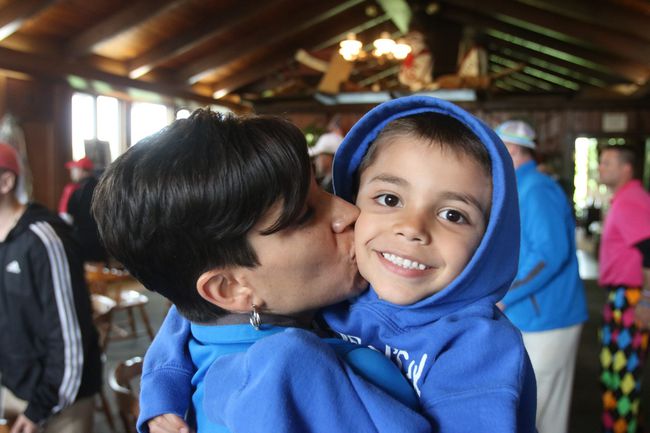
Image courtesy of CTF
Become a runner
The next step was to ask my friends and family for donations. From the start, I told everyone that I had a three-year plan: I would work my way up to running a 10-mile race the first year, a half marathon the next, and a full marathon the following year. I set this expectation for myself and my circle in hopes that it would encourage them to continue donating to the cause.
In April 2013, as a precursor to my 10 mile race, I ran my first 5K and finished in 38 minutes. My first thought after crossing the finish line? “I hate this.” My feet were begging to be iced and simply walking felt unbearable. But I felt like this was the only thing I could do to help my child and everyone else living with NF1, which, according to CTF, affects one in 3,000 people worldwide. (Another way to think about prevalence? 120 people are born with NF1 every day.)
In short, fundraising is what kept me going. Also knowing that the funds went to CTF, an organization that seems to find the right balance between patient advocacy and influence on researchers to advance understanding of the disease, made it worthwhile for me.
In October 2013, I ran and walked my first 10-mile race in just over two hours. In 2014, I ran a series of 5Ks, completed a 7-mile race, and ran a half marathon for CTF's NF Endurance team. That same year I also completed my first marathon early. At this point, it was clear that running had officially become a part of my world - and I loved it.(
How running helped this cancer survivor accept her amputation
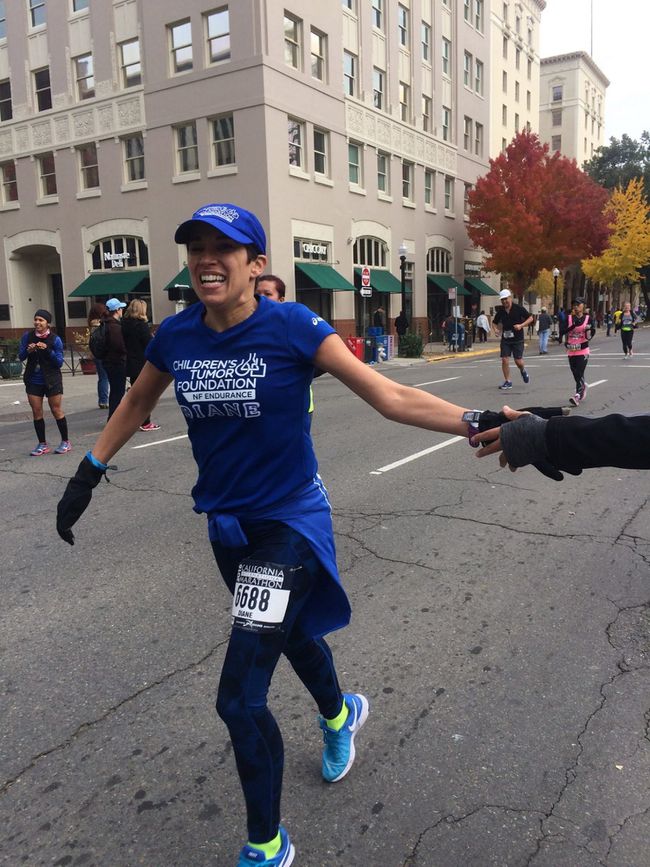
Image courtesy of CTF
Then, on Easter Sunday 2015, we found a large tumor, known as a plexiform neurofibroma, on Alex’s spine. An MRI showed that our son, then 2 1/2 years old, also had a brain tumor, known as an optic glioma, on his hypothalamus (the part of the brain that controls hunger, heart rate, sleep, thirst, among other things). Both were inoperable. Sick with worry, we helplessly asked our doctors what we could do to help our little boy. Her answer was again to watch and wait. The tumors did not cause life-threatening symptoms, they said. So we had no choice but to wait and see whether any treatments or interventions would be necessary.
I went to bed that night feeling like I had failed my son. I had no idea what to do and felt incapable. I reached out to my contact at CTF, informed them of the news and asked if there was anything they could do to help. At 6am the next morning, I opened my inbox to find that she had sent me a list of specialists and clinics shared by other moms in the Northeast. Overnight I went from a place of complete darkness and confusion to a place of empowerment.
My husband and I immediately began exploring our options and determining which professional would be best suited to help Alex. The whole situation only fueled my desire to keep running, and by December 2015, I had run four half marathons and three full marathons and had raised $70,000 for CTF since starting this journey in 2013.
But then my whole world turned upside down.
The diagnosis that changed everything
I was traveling in January 2016 when unprecedented exhaustion struck me. A few days later, the tips of my hands began to go numb and tingle as if they were on the verge of frostbite. And as the hours passed, that feeling moved to my face and my highs, and I got one of the worst headaches of my life.
That night I drove myself to the emergency room, where the doctors insisted on keeping me overnight for observation. They thought I was having some sort of allergic reaction and gave me a steroid and some painkillers for the headache. The next day I went home feeling worse. I remember squatting down to tie my son's skates and my legs gave out. I couldn't get up again. I immediately called my GP, who told me I needed to go back to the hospital because all of my symptoms suggested I had Guillain-Barré syndrome (GBS), a rare condition in which your body's immune system attacks your nerves, potentially causing muscle weakness and paralysis. (
Here's the deal with the Johnson & Johnson vaccine and Guillian-Barré syndrome
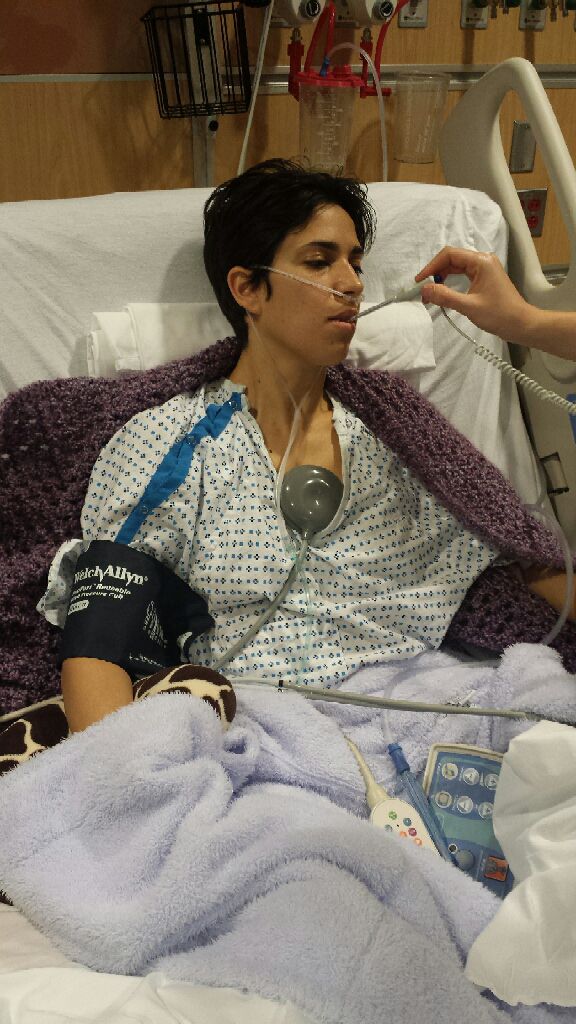
Image courtesy of CTF
I checked myself into the hospital where doctors ran a series of tests to find out what was wrong with me, only to confirm that all the results did indeed point to GBS. Meanwhile, over the next few days, my body grew weaker and weaker until I was completely paralyzed and was transferred to the intensive care unit. On the fourth day in the hospital, I could no longer move my limbs; I couldn't swallow, I couldn't blink, I could barely whisper, but somehow my mind was still sharp. I was trapped in my own body and didn't know if I would ever get out.
A million thoughts raced through my head at that time. I thought of my family, my husband and of course my sons Justy and Alex. What would her life be like without me? Who would continue to fight for Alex and other NF warriors so that they could one day be treated or even cured?
During my seven week stay in the hospital,I prepared myself for death (in a minority of cases, GBS can be fatal due to complications; about one in 20 will die from the disease, according to the National Health Service). I truly believe in the power of prayer, so I relied on God to help with this insurmountable challenge. It wasn't until I started working with a physical therapist that I felt a glimmer of hope. Every day a PT visited my room for 10 minutes to stretch and exercise all of my limbs. Slowly but surely I started to get some feeling back.
I remember asking him one day when I would be able to walk again. He looked at me confused, as if I was either stupid or highly motivated since I couldn't move a bit of my body on my own. In fact, doctors told me that I would probably need a year of physical therapy to regain my mobility, and it could be another six months to a year before I could even think about walking again. But I was sure I could recover faster.
As I continued my rehab to help regain mobility, a process that is an essential form of treatment for GBS, I eventually got around to riding a pedal bike myself. It was simple and straightforward, yet grossly intimidating. My PT helped me get started and before I knew it, I was pedaling alone. At this point there was no stopping me. I knew in my soul that I would walk again.
Without giving it much thought, I signed up for three races while still in the hospital - never mind that I couldn't even stand, let alone run on my own. One of those races was the California International Marathon in December 2016. Yes, my health team thought I was crazy, but I knew if I set that expectation for myself, I would pull through.
Overcoming my illness...and hopefully my son's
I was released from the hospital on March 4, 2016 and ran for the first time on April 9 - just three months after being completely paralyzed. I had no plan for this run other than I would go as long as I could. I ran for 22 minutes straight.
My doctors called my recovery miraculous. They couldn't say for sure that running was the reason I got back on my feet so quickly, but I firmly believe it. I think not only did it help me regain my strength physically, but the mental strength I developed through training also played a big role in speeding up my recovery. (
This mother of six became a 10-time marathon runner to overcome domestic violence and type 2 diabetes
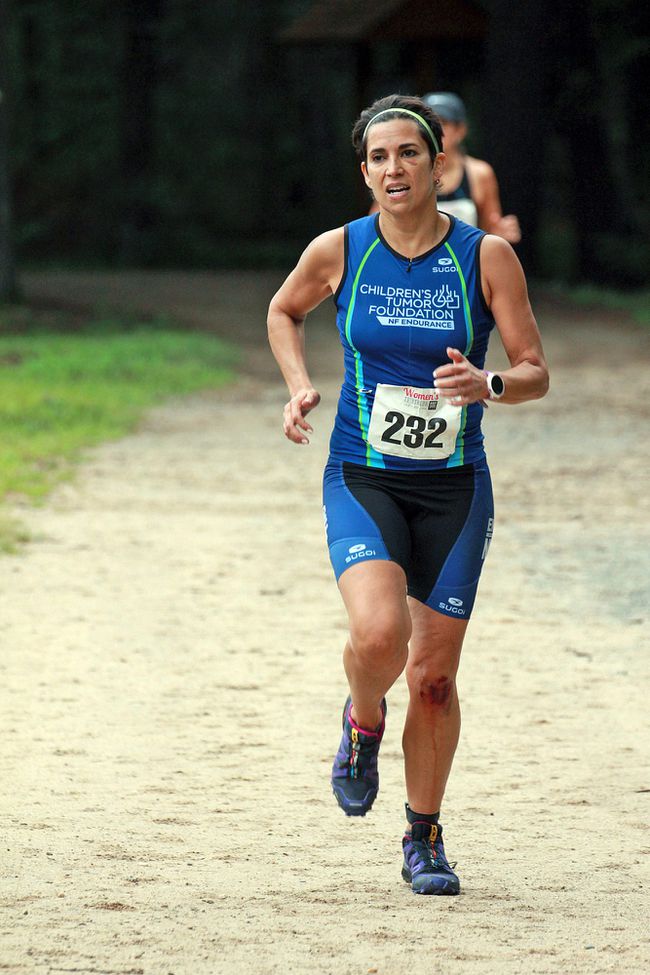
Image courtesy of CTF
The first 5K I signed up for after my paralysis was the same 5K I ran for the first time in 2013. There was no better way for me to restart my running journey. After the 5K, I completed a Ragnar relay, where a large team completes a total of 200 miles while training for the California International Marathon.
When I ran past the start line of the marathon in December, my goal was to just make it to the finish line. Despite faceplanting on mile 17, I finished in 4 hours and 44 minutes - a PR for me. This was also the first time I was able to run a marathon from start to finish without walking.
Since then, I have completed two triathlons, eight half marathons and three marathons – all of which I completed to raise funds for CTF. And this year I have my sights set on my fifth TCS New York City Marathon.
Like many GBS survivors, I have largely recovered, but I still have persistent symptoms. I often have chronic fatigue, foot drop (where I have difficulty lifting the top part of my foot), numbness on the right side of my body; Sometimes my right eye also droops.
But all in all I have a blessed life. I can do whatever I need to do for myself, my family and my friends. And best of all, I still have running.
For me, running means that I have the strength to create a future for my son without tumors and without pain. It also gave me focus. When the anxiety, self-doubt, and self-esteem increase - and I start to think there's nothing I can do for my son - I know I can always go for a run. It is a very prayerful time for me that calms me down and helps me return to myself. (
The truth about runner's high
To any other NF parents out there, my advice would be to not waste time on things you can't change. Instead, try to make the most of your time with your children, as you may not have them forever.
When it comes to Alex, I have no idea what his future holds. Will he make it to adulthood? Will he have a good quality of life? Does he remain pain-free? I just don't know. But because I have running, I have perspective. It allows me to think about these things but also put them to bed when I get home and just love my kids.