

 Suche
Suche
At-home workouts aren't exactly new, but they're definitely having a moment
While the on-demand at-home workout trend isn't revolutionary (lest we forget bike shorts, over-the-pants thongs, and Jane Fonda-style leg lifts), experts think it's going to go way up from here. If you haven't started streaming workouts or brought some really technical workout equipment into your home, that's about to change. Here's why. 1. The millennial lifestyle is undergoing a major shake-up. The largest and most active group of people on the planet is entering a new phase of life with serious time constraints. That's right, Millennials are not only the largest living generation on Earth, but...

At-home workouts aren't exactly new, but they're definitely having a moment
While the on-demand at-home workout trend isn't revolutionary (lest we forget bike shorts, over-the-pants thongs, and Jane Fonda-style leg lifts), experts think it's going to go way up from here. If you haven't started streaming workouts or brought some really technical workout equipment into your home, that's about to change. Here's why.
1. The millennial lifestyle is undergoing a major shake-up.
The largest and most active group of people on the planet is entering a new phase of life with serious time constraints. That's right, Millennials are not only the largest living generation on Earth, but they're also the most fitness-obsessed. Millennials are more committed to proper nutrition and exercise than any other generation (76 percent exercise at least once a week) and have been a driving force behind the fitness industry's serious boom over the past decade.
According to Pew Research, this demographic is slower to marry and start a career than previous generations—but now, ages 20 to 36, more Millennials are finally taking the plunge and becoming parents. It's not just your imagination or your Instagram feed - more than a million millennials become mothers every year.
So what happens when a sports-loving segment of society begins a season of parenthood? Expect an uptick in home fitness equipment, streamed fitness content, and on-demand workouts. It makes sense: The less flexible your schedule becomes, the more you'll rely on your fitness to come to you instead of trekking across town chasing your favorite studio instructor.
One answer to this is Studio Tone It Up, founded by Tone It Up founders Katrina Scott and Karena Dawn. Studio TIU is the fitness empire's latest foray into the world of workout apps, and the company has seen firsthand how the shift to at-home fitness began this year; Scott also noted that many subscribers like her are new mothers.
Scott and Dawn report that fans have told them they've canceled gym memberships, and that on-demand workouts on the app are "more accessible, more fun, easier to fit into their busy lifestyles" and get them out more than just getting to work, Scott said. (Try this 10-minute Tone It Up ab workout to get a taste.)
While new moms struggle with feelings of isolation, especially in the early stages, streamed at-home workouts can provide a sense of camaraderie and community. “Just recently, a member of our community wrote to us saying that the app adds a level of support she has never experienced before and that she never feels alone while working out,” Scott tells us.
These new moms can find trendy at-home plans tailored specifically for training during pregnancy and postpartum, thanks to some legendary Millennial trainers who are navigating motherhood themselves. People like Emily Skye, Kelsey Wells, and Massy Arias have programs you can follow at home. Even BBG queen Kayla Itsines is 24 weeks pregnant at press time and shares workouts you can do while pregnant.
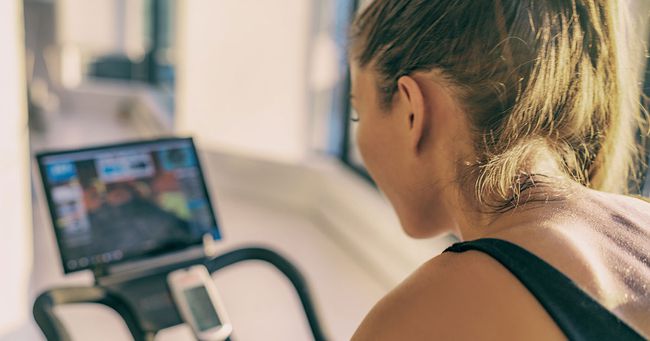
Photo: Maridav / Shutterstock.
2. Small-towners crave inclusion.
“We sell a bike to every state every day,” a Peloton spokesperson told the Wall Street Journal. While urban metropolitan areas like LA, San Francisco, New York and Chicago have become saturated with boutique fitness centers - due in large part to large millennial populations - those in smaller metropolitan areas have largely been left out. But it's not just people in small towns; Cities like San Diego, Seattle, and Denver (all of which have large millennial populations) don't even have an Equinox, let alone the range of boutique fitness you'd find in the largest cities.
Streamed workouts give people in these regions access to the best workouts around the world without waiting for an Equinox or Barry’s Bootcamp store to open.
“The majority of the population does not have access to the world's best trainers,” said Tonal's founding trainer Liz Letchford, MS, ATC Tonal is a minimalist, all-in-one home fitness system that uses electromagnetic resistance with an on-demand video coaching interface. (Think: cable resistance machine meets smart TV.)
“To be trained by an elite coach, one typically must live in a major city, have a schedule that allows one to attend one of the coach's limited weekly appointments, and have an income that is compatible with continuing the coaching relationship for months or years to achieve the desired results,” she said.
Fitness streaming brands and home gyms are focused on attracting top talent to deliver exceptional fitness programs to subscribers regardless of region. Thanks to new technology, “you could live on the moon and still have access to your favorite trainer,” says Letchford.
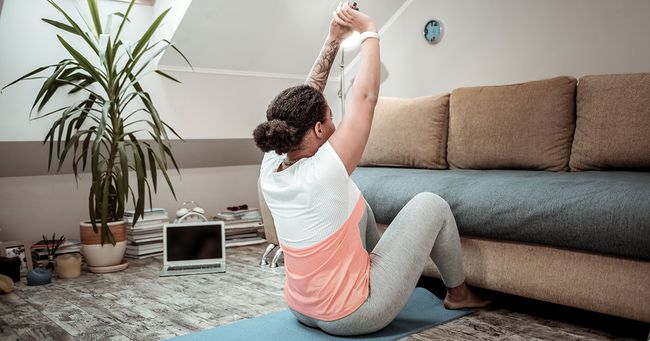
Photo: Dmytro Zinkevych / Shutterstock.
3. It offers on-demand inclusivity and flexibility.
Knoxville, TN-based fitness influencer, entrepreneur and mother of two Sarah Stevens hits the perfect cross-section of the two categories above: a millennial mom in a smaller metro. Thanks to parenting, she has little flexibility when it comes to scheduling a boutique fitness class (her main option for this is "get up at 4 a.m., go to class at 5 a.m., then rush home"). And since she lives in Knoxville, she hasn't found any studios similar to SoulCycle and Rumble Boxing. Essentially, they are exactly the demographic for on-demand at-home workouts and are representative of a large portion of the United States. (Related: How to Wake Up Super Early to Work Out, According to Women Who Do It at 4 a.m.)
“When I get on my Peloton bike at home, I can get a little taste of soul,” Stevens said. In addition to the Peloton bike, she also owns a ProForm treadmill (another on-demand coaching device) and uses Tone It Up workouts and the SWEAT app to workout at home. "Using an app or a streamed video, I can find snippets of time throughout the day to work out," she told us. "Many fitness apps have options for shorter workouts as opposed to an hour-long studio class. It's nice because I can get a little sleep in and still take a 20-30 minute Peloton class and then find time in the evening to do 20-30 minutes of strength training!"
Based on what she's seen from her own followers and their interests, Stevens agrees that the at-home trend will continue to grow significantly in 2019. “I've found that a variety of people love the ability to workout at home with on-demand videos - it appeals to a variety of people for many different reasons,” she said. "Moms can save time by working out at home because they can skip the travel time to and from a local studio or gym, and it's also a great money saver for college girls and young professionals. Monthly studio packages can break the bank for some, but paying $15 to $25 a month for an app with lots of different workout options isn't really a lot of money."
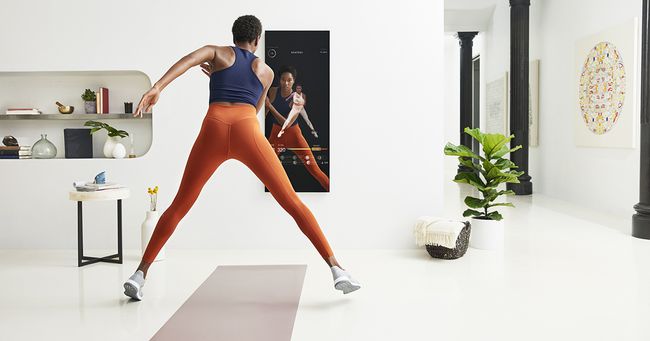
Photo: Mirror.
4. Tech fitness brands are seeing serious growth.
Peloton introduced its new $4,000 treadmill in early 2018. Over the past year, it has become a $4 billion company and increased its subscriber base to 1 million. While they may be the most identifiable brand in the space, they're hardly the only one.
Tonal launched in the Bay Area in 2018. Founder Aly Orady (who reversed his diabetes and cured his sleep apnea with daily fitness commitment) had an epiphany on a workout bench and created the "micro-gym" that is Tonal to complete his entire workout routine at home. The brand bolsters its electromagnetic weight system (one that eliminates the need for multiple machines) with coaching programs that you would typically receive from a personal trainer. Letchford expects the at-home trend in 2019 to focus not just on on-demand workouts, but strength training in particular.
She calls Tonal the “perfect complement” to the currently popular cardio machines. She's right - the ProForms, Pelotons, and Nordic Tracks are certainly fabulous, technically advanced home fitness machines, but they're all cardio-centric. (FWIW, Peloton also offers strength training boot camp classes as well as yoga, and their newest Nordic Track rowing machine offers exercises on and off the machine.) In terms of strength training (at this level and capacity). ), Letchford says, “Nothing else has come close to helping people bring the entire gym—your barbells, your weight machines, your dumbbells—home.”
MIRROR, another futuristic streaming device, takes sleek home fitness equipment even further: It's a digital mirror that displays live and on-demand workouts, including cardio, strength, yoga, Pilates, barre, boxing, and stretching. It's as close as you can get to bringing a personal trainer to your home without actually doing it: MIRROR also allows you to communicate with a trainer via the built-in video microphone, making it a two-way communication workout unlike most other platforms.
But you might not be ready to invest in home fitness equipment—after all, Peloton, MIRROR, and Tonal equipment will run you thousands of dollars. If you're still looking for engaging on-demand and livestream workouts, there are tons of options now, and we predict there will be even more in the coming year.
“This coming year, home workouts will be more fun, engaging and connected,” Letchford said. “Instead of just watching a video or streaming a live class, you can interact in real time, get up-to-date coaching advice and make adjustments.”